







Related products
Greenfield airports
About greenfield airports
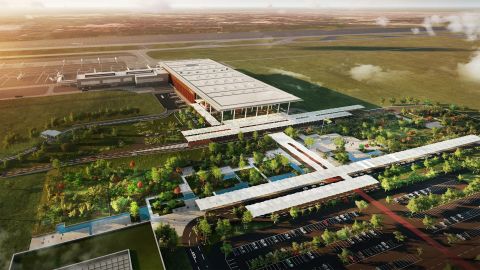
A greenfield airport is a new airport built on previously undeveloped land which allows for efficient design and modern operations. Rather than expanding or upgrading an existing facility, this approach allows planners to design airport infrastructure, passenger flows, and operations from the ground up. Without the constraints of legacy systems or layouts, greenfield airports can be planned with modern airport technology and IT systems, ensuring efficiency, and future growth in mind from the very beginning.
Examples of greenfield airports include Western Sydney International Airport (WSI) in Australia and Noida International Airport (NIA) in India.
The case for developing greenfield airports
Greenfield airports are typically developed in markets that need to meet growing inbound or outbound passenger demand, relieve congestion at existing airports, or support regional economic growth. As air travel continues to increase, many established airports face limitations in space and infrastructure.
Building a greenfield airport provides an opportunity to create additional capacity for these markets while designing operations, connectivity, and passenger experience to meet current and future needs.
The differences between greenfield airports and normal airports
Unlike existing airports, which must adapt around legacy infrastructure and systems, a greenfield airport can be designed with a fully integrated approach from the outset. This allows for more efficient layouts, streamlined passenger journeys, and better coordination between stakeholders. It also enables the adoption of modern technologies and operational models without the constraints of retrofitting older environments.
Key players behind greenfield airports
The stakeholders involved in the funding, planning and construction of a greenfield airport are often varied. Examples of key players include:
- Project owners or sponsors – such as national or government authorities
- Public or private investors
- Airport planners
- Architects and designers
- Engineering and construction firms
- Technology and IT partners
- Operators and airlines
Main features
Features of a greenfield airport
A greenfield airport can be designed to support efficient, scalable and coordinated operations from day one. Without legacy constraints, these airports can integrate modern systems, streamline passenger flows and enable better collaboration across stakeholders. The result is an environment where operations, data and experience are closely connected.
Terminal layouts and processes can be designed to minimize congestion, reduce wait times and create clear, intuitive journeys from arrival through to boarding.
Operational data can be shared across stakeholders, providing a unified view of airport activity and enabling faster, more informed decision-making.
Modern self-service and biometric technologies can streamline check-in, security and boarding, increasing throughput while maintaining high levels of security.
Facilities and systems can be designed to adapt to changing demand, allowing airports to expand capacity or introduce new capabilities without major disruption.

Benefits
Benefits of a greenfield airport
Creating a new airport creates the conditions for establishing more efficient, resilient and passenger‑focused operations. By designing systems, processes and infrastructure together from the outset, airports can improve coordination, reduce complexity and deliver better outcomes for all stakeholders.
Reduced complexity
Designing systems and processes together from the get gosimplifies coordination across stakeholders, reducing fragmentation and making airport operations easier to manage and scale.
Faster, more responsive operations
Connected systems based on real‑time data enable quicker decision‑making and more responsive management, helping airports adapt quicker and more efficient to changing conditions and disruptions.
Enhanced passenger experience
Streamlined journeys, reduced waiting times and consistent processes create a smoother, less stressful experience for travelers, improving satisfaction and overall perception.
Improved commercial competitiveness
Better passenger flow and reduced congestion increase dwell time and engagement, supporting higher retail spend and making airports more attractive to airlines and partners.
Need more details?
Frequently asked questions about greenfield airports
Greenfield airports address the industry “capacity crunch” by designing infrastructure and operations from the outset, using automation, data and streamlined processes to handle more passengers within the same footprint.
In many cases, greenfield airports can reduce or eliminate the traditional check-in desk from day one of operation. With digital identity and modern delivery systems, passengers can arrive “ready to fly,” reducing reliance on fixed check-in desks and enabling more flexible terminal design.
Modern greenfield airports will mostly be built using the latest in technology, such as connected systems, biometric processing and real-time data, which enables more seamless passenger journeys, efficient operations and better coordination across stakeholders.
Early engagement ensures that operations, passenger flows and systems are designed together from day one, reducing risk, avoiding redesigns and enabling airports to perform optimally.
Amadeus works with airport planners, airlines and authorities from the earliest stages to design connected operations, enabling seamless journeys, efficient processes and future-ready infrastructure.