








Blog

How can a secure and interoperable digital identity eco-system make travel faster and more secure?

September 8, 2026
Last updated: September 9, 2026
6 min read
Asian male using face recognition asset
Photo of Jeff Lennon
Jeff Lennon
Vice President, Travel and Governments - Amadeus
Share it!

How technlogy is combining to create a digital identity ecosystem

Let’s look at some of the capabilities powering secure and seamless experiences at journey touchpoints:


  • Standards – industry standards like International Civil Aviation Organization ICAO’s Digital Travel Credentials (DTC) ensure global interoperability for digital identity verification at border touchpoints. The DTC is not a new identity, rather it is a secure framework for digitalizing ePassport data so border authorities are assured of its authenticity.

  • Digital identity – wallets, like those built to the EU Digital Identity Wallet specification, allow for storage and consent based sharing of digital credentials.

  • Identity gateway – solutions like Amadeus Travel Ready connect to the travel ecosystem so digital credentials can be securely shared with border authorities, airports and airlines where required for the relevant travel or border process.

How can an interoperable digital identity ecosystem reduce time at border touchpoints?

A secure, interoperable digital identity ecosystem combines these technologies to move passenger screening checks earlier in the journey. Let’s look at a typical experience.


  • Traveler enrolls and creates a secure verifiable credential using a government app

  • The traveler consents to share the digital credential with the border authority

  • The authority receives the data well in advance of travel and performs relevant identity verification and security checks.

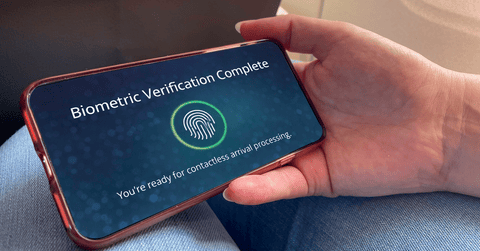
  • On arrival, the traveler verifies with facial biometrics at an eGate with no requirement to present a passport

This simple, secure, speedy process frees border agents to work on higher risk cases with most travelers able to cross the border in just five seconds.


The above process assumes ICAO’s Digital Travel Credential Type 1. As the DTC standard develops, the traveler’s mobile device will act as the physical component – further simplifying how we cross the border. Key to these developments is ICAO’s Public Key Directory (PKD) which provides a secure, centralized means for authorities that issue ePassports to share the information required to validate those documents. As the DTC works with the same core cryptographic standard as ePassports, participation in the PKD supports DTC and contactless use cases at the border.

Why border authority, airport and airline co-operation is the key to seamless travel

The travel industry is progressing with similar programs to unlock a seamless experience across the end-to-end traveler journey. As part of an IATA-led Proof of Concept we recently worked with industry partners to deliver the first multi-airline, multi-airport, multi-leg biometric journey.


Selected travelers used verifiable credentials stored in a digital wallet on their smartphone to enable biometric verification at all departure and transfer points.

The entire international trip (from Tokyo Haneda to Hong Kong and then on to a European airport) was completed successfully in a live environment, with passengers providing informed consent for identity data to be re-used across the journey for a smooth and interoperable experience.


The PoC provided a glimpse into the end-state for the journey experience:


  • No paper document checks anywhere during the journey

  • The traveler’s face is their boarding pass and passport

  • Enroll for biometrics once – travel anywhere

  • Interoperable: even for complex trips with multiple airlines

  • Travelers remain in control of their data with user controls and informed consent-based sharing mechanisms.

For authorities, the objective is to develop a secure sovereign border control system that not only connects effectively with its back-end databases but also with the broader travel ecosystem.


Doing so means immigration processes form part of this end-to-end journey, with improved security achieved through appropriate information sharing between authorized ecosystem participants. This type of seamless travel experience provides a meaningful improvement for travelers that is likely to influence their choice of travel provider, and destination. With tourism contributing circa 10% of global GDP and a considerably higher percentage for some countries, a secure and seamless travel experience supports economic growth.

Orchestration unlocks successful digital identity ecosystems

Orchestration is the foundation border authorities can harness to build a secure, interoperable digital identity ecosystem. Our work with an island nation has seen Amadeus deploy an end-to-end solution that manages immigration from initial application to border crossing and enforcement.


The authority screens and validates travelers before they board a flight, so entry using ABC eGates at arrivals is secure and fast. With a record of each traveler’s history, simple cases progress easily while high risk cases can be identified and actioned anywhere across sovereign territory.


The country has achieved a secure digital identity layer at all its air and sea border crossing points - incorporating risk-based screening, immigration management and integration with the broader travel ecosystem.


The transformational technology to build secure, interoperable, digital identity ecosystems is ready today, and we’re beginning to see rapid adoption by border authorities and the travel industry. The combination of transformational technologies like AI and biometrics can help create a digital identity layer across the journey while supporting security, efficiency and privacy objectives. The key to maximizing outcomes is cooperation that prioritizes interoperability using global standards like the DTC, so journeys can be orchestrated end-to-end.

Success stories

Frequently asked questions


TO TOP

TO TOP