






Related products
Biometrics in travel
About biometrics
Biometrics is a way of confirming who a person is by using measurable human characteristics. These characteristics can be physical (how someone looks or sounds) or behavioral (how someone acts).
A biometric system creates a mathematical representation of a characteristic and compares it with an earlier reference to determine whether the two representations are similar enough to be considered a match.
Biometrics is used across many industries, including travel, border management, finance, healthcare, education, and workplace access, wherever reliable identity verification is required.
The use case for biometrics in travel
In travel, many stakeholders — including airports, airlines, border authorities, cruise operators, and others — need to reliably confirm a traveler’s identity at multiple points during a journey.
Two related but distinct processes are involved:
- Recognition: determining who someone is by comparing their biometric data against a known population.
- Verification: confirming that a person is who they claim to be, usually by comparing their biometric data to a previously enrolled reference.
A typical biometric journey may involve:
- Enrollment - capturing biometric data and linking it to a government trusted identity, often a passport.
- Association - linking that identity to travel credentials such as a boarding pass.
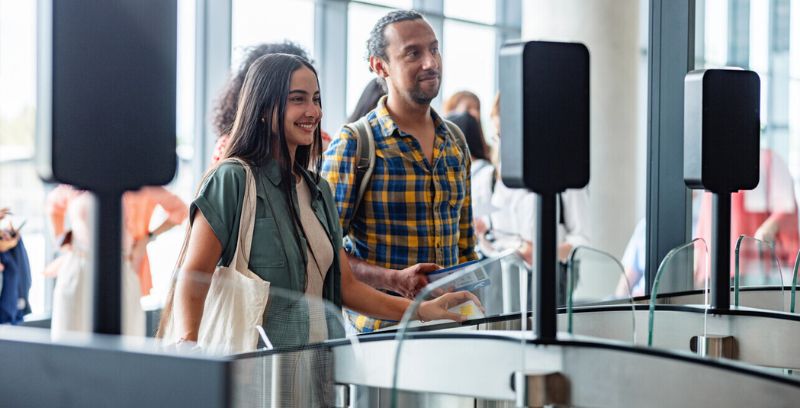
- Use – sharing travel credentials through identity confirmation at selected touchpoints, such as check‑in, bag drop, security access, lounge entry, boarding, or at border control.
At these points, the system compares a newly captured biometric sample with the enrolled reference to confirm the traveler’s identity.
While today biometrics in travel is most used in airports, other sectors such as car rental, cruise and hospitality, face the same requirements of identity confirmation, and all sectors are pursuing possibilities with biometrics.
Biometric identifiers
Biometric identifiers are typically grouped into physical and behavioral identifiers.
Examples of physical identifiers are:
- Face
- Fingerprints
- Iris
- Voice
These identifiers rely on measurable physical traits. The biometric system does not store images or recordings as such; it extracts distinguishing features and converts them into mathematical data for comparison.
Behavioral identifiers examples include:
- typing rhythm
- gesture patterns
- interactional behavior with keyboards and keypads
Behavioral identifiers are typically used to assess continuity of identity rather than to establish identity for the first time.
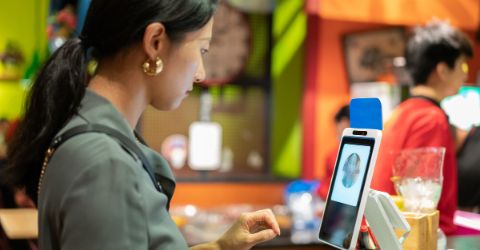
In airport environments and travel in general, facial recognition is currently the most widely used biometric method. This is largely because it can be linked to government‑issued travel documents and allows for a contactless passenger experience.
Benefits
Benefits of using biometrics in travel
Simplified and seamless journey
Biometrics can reduce the need for repeated manual document checks. Once enrolled, travelers may be recognized at multiple checkpoints without presenting physical documents each time.
Improved passenger flow and enhanced traveler experience
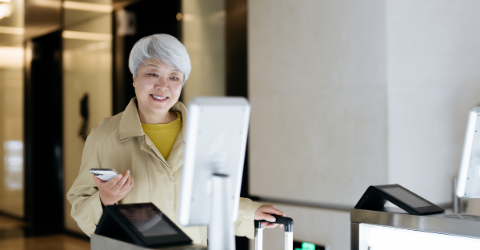
Automated identity verification with biometrics can reduce queues and waiting times, providing better, faster and frictionless travel.
Operational efficiency
By automating routine identity checks, biometric systems can reduce manual workload and allow staff to focus on exception handling and passenger assistance.
Strong security through strong identity binding
Biometric systems use complex models of human traits to securely link people to verified identities. Yet, they can be attacked (spoofing, morphing, deepfakes), so strong protections are essential.
Features
Features and concepts of biometric systems
Specialized software processes the captured input and extracts distinguishing features, converting them into a mathematical representation suitable for comparison.
Matching is the comparison of two biometric representations, for example a newly captured sample and a previously enrolled reference, and calculating a similarity score to determine whether they correspond to the same individual.
The controlled process of capturing biometric data and creating a reference linked to a verified identity. Enrollment may occur either at physical locations, such as airports or remotely, for example, via mobile devices or applications.
Biometric systems can be designed using different data management models. In a centralized workflow, biometric references are stored and managed by a designated authority, such as an airport, airline, or government agency. These systems include privacy-first consent options, collecting only what is needed, with clear rules for how long data is kept, and records of who accessed it and when.
In a decentralized workflow, biometric references are stored on personal devices in a dedicated app or in digital identity wallets. Data is shared selectively, with strict user consent, and often only for the duration required to complete a transaction.
Both approaches can be designed to protect privacy, depending on the established rules in place, the technology used and the laws and requirements that apply.

Need more details?
Frequently asked questions about Biometrics in travel
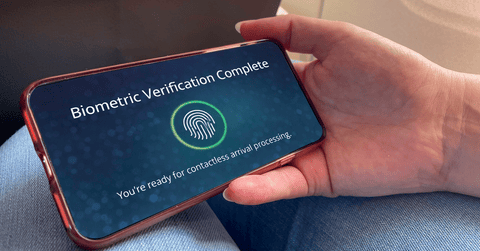
Travelers can face up to ten identity checks on a single trip. Biometrics lets them enroll once, from a mobile or kiosk, and be recognized instantly at each checkpoint without presenting documents, cutting queues, reducing friction and strengthening security through consent-based, privacy-by-design verification.
Biometrics delivers three core benefits: a seamless traveler journey with fewer queues and less friction; operational efficiency through automated identity checks that unlock capacity and free staff to serve passengers proactively; and stronger security via trusted, consent-based identity verification applied consistently across every touchpoint.
Key trends include mobile digital identity wallets (EU Digital Identity Wallet, ICAO Digital Travel Credential, Google and Apple Wallets), supported by regulatory mandates and forecast to scale rapidly through 2030, ecosystem collaboration across airlines, airports and borders, consent-based data control and free-flow biometric corridors identifying travelers on the move.