







Blog

Biometric technology is making the seamless airport experience a reality

September 15, 2026
5 min read
Man looking at mobile phone for digital identity
Rudy Daniello
Rudy Daniello
Executive Vice President, AirOps - Amadeus
Share it!

While AI has dominated global headlines in recent years, the growing influence of biometric technology has gone somewhat under the radar. Yet, its potential to transform our travel experiences may yet prove just as profound.


We are already seeing this take shape in our everyday lives. Fingerprint and facial recognition, for example, are now woven into the fabric of several modern experiences: unlocking smartphones; authorizing payments; accessing workplaces; and verifying identities. At Amadeus, we believe biometric technology is key to a more connected and seamless future for travel. One that builds on interoperability and orchestration across the entire journey to remove friction, reimagine operations, and better serve travelers end-to-end.


For us, biometrics is not a standalone capability. It is a core, foundational layer of the travel platform we provide to the industry, building on our existing connections across the wider travel ecosystem.


Below, I want to focus on one area where this vision is becoming especially tangible, namely the airport and borders experience, where biometric technology brings a more seamless, secure, and traveler-centric experience to life day by day.

What does biometric transformation look like at the airport?

Think about the average flight, and what happens at the airport. Then count the number of times you need to prove who you are. Check-in. Bag drop. The pre-security gate. The lounge, perhaps. The gate itself. Then immigration at the other end. On a typical journey it can be as many as ten times, and I am sure I am not the only one who has stood in a queue with a boarding pass between my teeth, digging through a bag for a passport.


Every one of those checks exists for a good reason. Somebody has to be certain that the person standing in front of them is who they claim to be. But doing that manually, again and again, is slow for the traveler and expensive and inefficient for the industry.


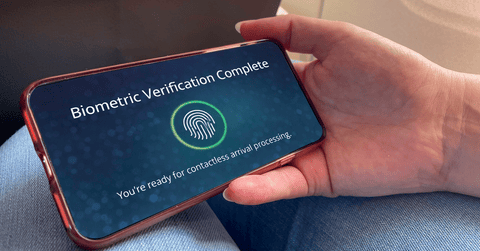
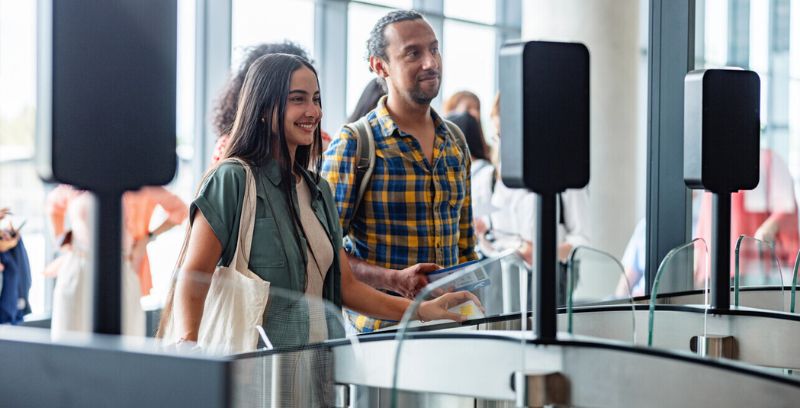
With the help of biometric technology, implemented across all of those touchpoints, we can remove a significant amount of friction. Passengers can enroll from their mobile phone ahead of traveling, or at a kiosk when they arrive. After that, no documents. Their face becomes their passport or travel document, with their identity confirmed by matching the image captured at the checkpoint with the image and biometric profile provided at enrolment.


In Curaçao, we see a clear example of this vision in action. Travelers can verify their identity before leaving home and then use facial recognition to move quickly through immigration on arrival, as pre-vetting and background checks have been enabled to take place before travelers reach immigration checkpoints. What was once a process involving queues and manual checks now takes less than ten seconds on average – strongly supporting Curaçao’s bold ambition of “from plane to beach in 15 minutes”.

Taking seamless to a new level

But it does not stop there. Some of the most interesting projects I see are not the ones that make an old process slightly faster, but the ones that make the old process disappear. Consider Indonesia, where the Directorate General of Immigration has deployed our Seamless Corridor and its AI-enabled “on-the-move” biometrics technology in two international airports. The identity of select, pre-enrolled travelers is validated in motion as they walk through the biometric corridor, with no need to present documents or even to pause for a facial scan.


When you see it in operation, it does not even look like technology. It looks like nothing is happening. But behind that apparent absence of action, the technology is creating striking results, increasing border-crossing capacity more than tenfold, and delivering a fully frictionless experience for travelers.

Videos

Rethinking the airport experience

Beyond traveler convenience, biometrics also gives airports, airlines and border authorities a way to rethink operations. Automating identity checks can reduce manual processes, speed up passenger flows, ease queues, and increase efficiency.

At scale, this contributes directly to solving one of the industry’s key challenges. Airports are facing significant capacity constraints, with demand growth outpacing infrastructure expansion. Europe’s airports welcomed an additional 100 million passengers in 2025, and EUROCONTROL forecasts that by 2050 they may be unable to serve up to 12% of demand.

With new runways and terminals hard to build, getting more from existing infrastructure is becoming essential. Biometrics provides a way to increase throughput without physical expansion, by reducing friction at key bottlenecks. Manchester Airport is bringing this to life, with biometrics allowing domestic and international passengers to share the arrival and departure halls. The innovative solution has helped the airport to defer capital expenditure needed to build the customary separate physical infrastructure, while ensuring buildings, boarding gates, aircraft stands, baggage belts, and check-in equipment are fully utilized.

Delivering a smarter, more intelligent, more connected era in travel

So, what will define the next phase of biometrics at the airport and border? The technology is here and has proven to be mature, with excellent efficiency results. Yet the opportunity – and the industry’s ambitions – extend far beyond efficiency alone.


True seamlessness comes from interoperability and collaboration. Airlines, airports, ground handlers, security partners and border authorities all manage critical parts of the passenger journey, often through different systems and processes. The next step is to bring those touchpoints together into one trusted, connected flow, where information moves responsibly, securely and in real time between partners, with privacy, consent and regulatory requirements built in.


Amadeus is uniquely placed to support this shift.


We work across the aviation ecosystem and manage passenger information from booking to arrival and beyond. Through our investments and recent acquisitions, we can bring together the hardware, identity platforms, orchestration software and professional services needed to deploy biometrics at scale across airport and border environments and make the seamless airport experience a reality.


We’ve come far, but I also could not be more excited about the future.


TO TOP

TO TOP