







Blog

Sustainability in travel will only advance with common standards and global collaboration

March 18, 2026
6 Min read
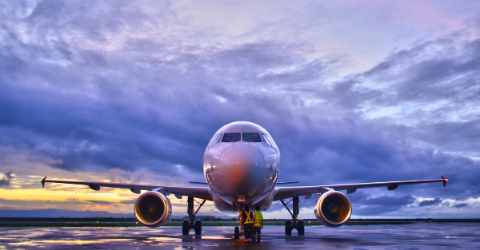
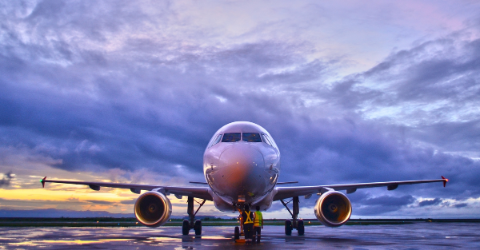
A front-facing view of a commercial airplane on a wet runway at dusk, with dramatic purple and blue clouds in the sky and ground crew equipment visible beneath the aircraft.
Juan daniel
Juan Daniel Núñez
Founder & CEO - Smart Travel News
Share it!

Talking about sustainability in the tourism sector increasingly means talking about technology. And few companies are as well positioned to do so as Amadeus, one of the major technology providers in the global travel ecosystem. With more than 400 million bookings processed annually and direct relationships with airlines, agencies, companies, and end travelers, the company’s capacity for impact goes far beyond its own emissions.

In this interview with Smart Travel News, Lucas Bobes, Group Environmental Officer at Amadeus, analyzes the role of technology as a true lever for sustainability, the current state of Sustainable Aviation Fuel (SAF), regulatory challenges, the importance of standardized measurement, and the urgent need for collaboration among stakeholders to address a problem that, by definition, is global.

Videos

From operational efficiency to emissions reduction

Amadeus’s approach to sustainability starts from a clear premise: technology adds value when it improves operational efficiency, and those improvements usually translate into environmental benefits as well. In aviation, small optimizations can generate highly significant impacts in absolute terms.

Bobes gives a common example that any frequent traveler will recognize: the time a plane spends taxiing on the runway before takeoff due to airport congestion. “Better coordination of information among the different airport stakeholders can significantly reduce those times,” he explains. Fewer minutes of waiting mean less fuel consumption, fewer emissions, fewer delays, and better use of infrastructure. It’s a clear “win-win” for airlines, airports, passengers, and the environment.

These types of solutions are already operational in European airports like Munich or Copenhagen and clearly reflect Amadeus’s philosophy: act on critical travel processes to achieve operational improvements that directly reduce environmental impact.

SAF: enormous potential, limited adoption

One element that gets a lot of attention on aviation decarbonization is Sustainable Aviation Fuel (SAF). Since IATA identified it as the main way to reduce emissions in the short and medium term, airlines, regulators, and technology providers have intensified their efforts in this area.

Amadeus’s approach is clear: facilitate the voluntary use of SAF by end travelers, integrating it into purchasing and distribution processes. To this end, the company works with both airlines and sales channels, allowing individual and corporate travelers to add SAF to their tickets.

However, adoption remains low. Bobes identifies two major barriers. The first is price: SAF is still three to five times more expensive than conventional fuel, making widespread voluntary adoption difficult. The second is the lack of regulatory clarity and a truly transparent market.

Communication plays a key role. “If travelers do not clearly perceive the return on their contribution, it is difficult for them to be willing to take on that extra cost,” he notes. Hence the importance of providing understandable, reliable, and comparable information at the moment of purchase decision.

Regulation, but with a global vision

Europe has taken a leadership role in sustainability and reporting, with initiatives such as the CSRD or SAF usage targets. However, Bobes warns of the risks of advancing in a fragmented way.

“Climate change is a global problem. CO₂knows no borders,” he emphasizes. Regulating locally can create competitive distortions and even counterproductive environmental effects, such as route diversions or intermediate stops to avoid stricter regulation

One of the major current challenges is the lack of a standardized system for calculating emissions per passenger. Depending on the methodology used, the same flight can yield very different results. This complicates both corporate reporting (especially for scope 3) and understanding by the end traveler.

In this area, Bobes highlights the work of the European Union Aviation Safety Agency (EASA) to move toward common, transparent, and understandable methodologies—a crucial step for sustainability to be measurable and comparable.

SBTi and internal coherence

Amadeus validated its climate targets with the Science Based Targets initiative (SBTi) last year and recently had to recalculate them after several acquisitions. Although its direct and indirect emissions are relatively low compared to airlines, the company considers it essential to lead by example.

The internal focus is on the use of renewable energy, energy efficiency of its offices, and projects such as the use of geothermal energy at its large development center in Nice, where about 5,000 employees work.

Beyond quantitative impact, Bobes emphasizes the cultural dimension. “Our main asset is talent. And more and more people want to work for companies that take sustainability seriously,” he says. In this sense, internal initiatives reinforce Amadeus’s credibility as a player committed to the sector’s sustainable transformation.

Collaboration is essential

If there is one idea that runs through the entire conversation, it is the need for collaboration. No player in the ecosystem can tackle a challenge of this magnitude alone.

Amadeus processes more than a million daily interactions with travelers, giving it enormous capacity to distribute information. But it does not intend to be the one to calculate the environmental impact of travel. For this, it has collaborated for years with the International Civil Aviation Organization (ICAO), using its official carbon calculator.

“ICAO has the legitimacy and neutrality. We have the capacity to bring that information to the end traveler at scale,” explains Bobes. Without this collaboration, neither organization could effectively achieve that goal.

The same principle applies to areas such as multimodality, where integrating different transport options can significantly reduce the environmental impact of door-to-door journeys.

A cross-cutting challenge for tourism

Although aviation receives much of the attention, the challenges affect the entire sector: airlines, agencies, hotels, destinations, and technology companies. Each has different realities, but all depend on common standards, reliable data, and informed decisions.

For Bobes, the sector first needs to agree on the starting point: how to measure, how to report, and under what rules to compete. From there, innovation and competition can accelerate the transition to a more sustainable model.

Technology, he concludes, is not the solution by itself, but it is an essential tool to make impact visible, guide decisions, and scale solutions. And, above all, to demonstrate that sustainability and efficiency not only can go hand in hand, but must do so if tourism is to continue growing in the long term.


This article was originally published on Smart Travel News and is republished here with permission.

TO TOP

TO TOP