







Biometric passports
About biometric passports
A biometric passport (also called ePassport, electronic passport or digital passport), is a traditional passport enhanced with and embedded contactless microchip that stores the passport holder’s identity information (name, nationality and passport number) together with one or more biometric identifiers. The primary biometric is a facial image, while some countries also store fingerprints and/or iris data.
The chip allows border authorities to electronically verify both the authenticity of the document and the identity of the traveler.
This digital layer makes biometric passports more difficult to alter or forge than traditional passports alone. It will also supports a smoother journey for travellers, especially at airports and borders that use automated gates or other digital identity checks.
Understanding biometric passport technology
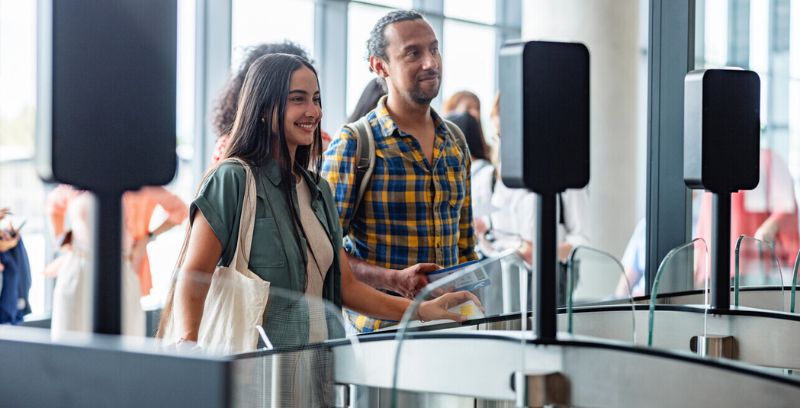
When the passport is scanned at an e-gate or border control point, the chip shares this information with the reader using short-range technology, similar to a contactless payment card.
The system then compares the image stored in the passport with the traveler’s live facial image captured at the checkpoint. This helps confirm that the person presenting the passport is the rightful holder.
Security is built into the process. Access controls help prevent unauthorized reading of the chip, while cryptography helps verify that the passport data is authentic and has not been changed. In simple terms, the chip adds a trusted digital layer to the physical passport, making border checks more secure, consistent, and efficient.
A governing international standard for biometric passports (Doc 9303 – Machine Readable Travel Document) is issued by the ICAO (International Civil Aviation Organisation).
Benefits
Benefits of biometric passports
Faster border processing
Automated gates can read the chip and compare biometric data in seconds.
Stronger document security
The embedded chip and digital security features make the passport harder to tamper with or counterfeit.
Reliable identity verification
Biometric data helps link the passport to the person presenting it.
Improved traveller flow
Efficient checks can reduce queues and support smoother movement through airports and borders.
Global interoperability
Common standards help border authorities verify passports issued by different countries.
Features of biometric passports
Typically includes a facial image and may include fingerprints or iris data where required by the issuing country.
Allows systems to read key passport details quickly and accurately.
Helps confirm that the chip data was issued by a trusted authority and has not been altered.
Enables the passport chip to be read by approved border control equipment.
Supports consistent verification across countries and border systems.

Need more details?
Frequently asked questions about Biometric Passports
The chip stores the passport holder’s core identity details and a digital facial image, which is considered the globally interoperable biometric. Depending on the country, it may also include fingerprints or other biometric identifiers.
Yes. The terms biometric passport, electronic passport, and ePassport are often used to describe the same type of chip-enabled travel document.
Border systems can read the chip, check the digital signature, validate the chip is not cloned, and, compare the traveller’s face with the biometric image stored in the passport.
No. They support border checks by making identity verification more secure and efficient. Final entry decisions remain with the relevant border authority.
What role do biometric passports play in modern travel? Biometric passports enable trusted identity verification across airport, airline, and border control systems. In the wider travel ecosystem, technology providers such as Amadeus support the orchestration of these interconnected processes, helping identity checks and passenger journeys run securely and efficiently.