Related products
-
Solutions
-
Airlines
-
Airports
-
Border Authorities
-
Corporate Travel & Expense
-
Integrations
-
Travel Sellers
-
-
Payments & e-invoicing
-
 AI at Amadeus
Driving integration, scalability, trust and integrity across the travel industry.
Learn more -
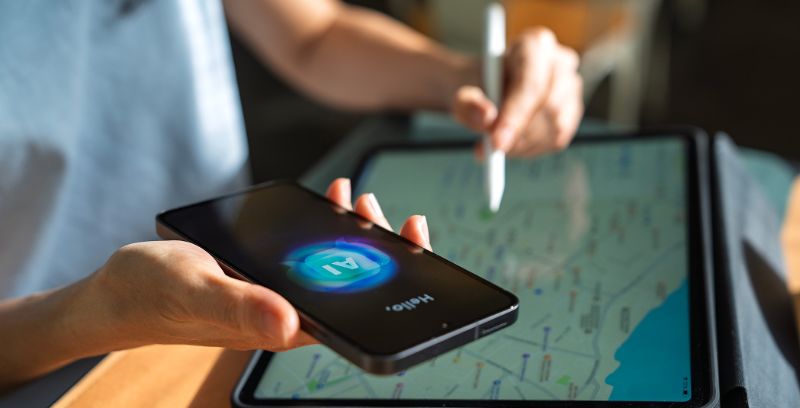 Unlocking the power of AI agents in travel
In this whitepaper, Amadeus and Microsoft explore how AI agents and modern data platforms are improving travel at every stage.
Learn more
-
-
Support & Training
-
 Already a customer?
Log into Amadeus Service Hub for product news, learning materials, and customer support.
Login
-
-
-
 Transforming travel with AI
Our partnership with Microsoft accelerates our Cloud journey and unlocks new, AI‑powered innovations that strengthen and elevate the travel industry.
Learn more -
 Landmark partnership between Amadeus and Google Cloud
Learn how this collaboration strengthens Amadeus' multi-cloud approach and AI innovation to improve efficiency, reliability and growth in travel.
Learn more
-
-
Resources
-
 Connected journeys: How will technology transform travel in the next decade?
From AI-driven planning and biometric check-ins to smarter disruption management.
Read the report -
 Six travel trends that will redefine how we travel in 2026 and beyond
Amadeus, in collaboration with Globetrender, unveils the tech, policy and innovation coming to transform the face of travel.
Discover now
-
-
Company
-
About Amadeus
-
Careers
-
-
Sustainability
Learn how we’re working to make travel a force for good.
-
 Amadeus Global Report
Gain insights into Amadeus' 2025 business, financial performance, and sustainability.
Read the report -

-
-
- Home
- Travel Glossary
- Biometrics
Biometrics in travel
What are biometrics?
Biometric technologies provide proof of identity by scanning and measuring an individual's unique physiological or behavioral characteristics, and then typically comparing this with the biometric information being previously digitally enrolled.
Examples of unique personal identifiers are fingerprint patterns, face, iris, voice, or typing rhythm.
Users of modern smartphones will already be familiar with personal biometric controls such as those that provide access to the device via face or fingerprint recognition. Biometrics in the form of fingerprint and DNA matching has been used by law enforcement for decades, in criminal investigations and, controversially, in certain types of criminal profiling. National identity card schemes and health insurance programs often use biometric traits to authenticate citizens and patients.
Biometrics offers quick, accurate, and convenient identification or identity verification of subjects for numerous purposes and across a wide range of industries, including travel, finance, healthcare, education, and office work, among others.
Biometrics in travel
In travel, airlines, airports, cruise lines, seaports, border authorities and other industry players all need to be able to efficiently perform passenger recognition (determining who someone is) and authentication (establishing that someone is who they say they are).
In biometric solutions for airports and other players, the use of facial recognition is the most common technique, and the technology allows travelers a seamless and contactless experience. Passengers typically enroll from their mobile device in advance or via a kiosk at the airport, and then no longer need to present documents like a passport, but instead can use their face as ID at numerous checkpoints such as check-in, bag drop, pre-security, to access a lounge, or at boarding and immigration, where their identity is confirmed by matching the image captured at the checkpoint to the enrollment image.
Benefits
Benefits of using biometrics in travel
Convenient and contactless
Biometrics allow travelers a seamless and contactless experience through quick, accurate, and convenient identification or identity verification. By using biometric data such as a facial scan, an individual’s identity can now be verified accurately in seconds.
Less waiting around
Biometrics is transforming travel, providing travelers with shorter queues and faster passage through the airport or border crossings, and travel providers, airports and border authorities benefit from more efficient processing and stronger security.
Room to grow
While today biometrics in travel is best known for reducing queues at border control and making the airport experience more efficient and frictionless, other sectors such as car rental, cruise and hospitality are all pursuing possibilities with biometrics.
Biometric Solutions
Introduce a streamlined biometric journey for passengers with a biometric solution designed specifically for the unique requirements of the airport environment.
Amadeus for Border Authorities
Our border control technology offers the security and privacy needed for regulated processes while providing a seamless experience for both border authorities and travelers alike.
Travel tech insights
Latest industry news and trends
-
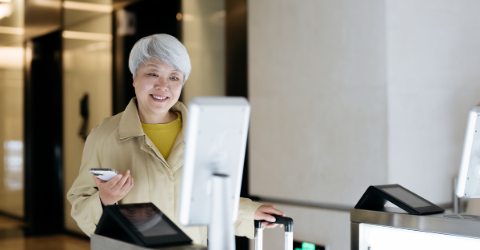 Press releaseManchester Airport redefines terminal design by enabling mixed domestic and international operations with Amadeus biometricsMarch 17, 2026Monica Hansen
 -
 BlogHow can we scale seamless border crossings with the Digital Travel Credentials (DTC)?January 23, 2026Rudy Daniello
 -
 BlogMSC, an Amadeus customer transforming travelOctober 21, 2025Luca Pronzati
 -
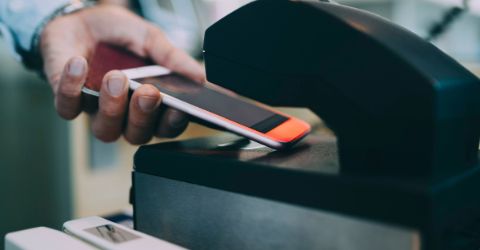 Press releaseTap to fly: Amadeus and Lufthansa test EU Digital Identity Wallet for seamless travelSeptember 16, 2025Monica Hansen
 -
 Press releasePerth Airport to enable an upgraded end-to-end biometric experience with AmadeusSeptember 11, 2025Monica Hansen
 -
 BlogFlights, camera, action – biometrics defining the seamless travel journey through facial recognitionMay 31, 2024Miguel Leitmann