-
Solutions
-
Airlines
-
Airports
-
Border Authorities
-
Corporate Travel & Expense
-
Integrations
-
Travel Sellers
-
-
Payments & e-invoicing
-
 AI at Amadeus
Driving integration, scalability, trust and integrity across the travel industry.
Learn more -
-
-
Support & Training
-
 Already a customer?
Log into My Amadeus Services for product news, learning materials, and customer support.
Login
-
-
-
 Transforming travel with AI
Our partnership with Microsoft accelerates our Cloud journey and unlocks new, AI‑powered innovations that strengthen and elevate the travel industry.
Learn more -
 Landmark partnership between Amadeus and Google Cloud
Learn how this collaboration strengthens Amadeus' multi-cloud approach and AI innovation to improve efficiency, reliability and growth in travel.
Learn more
-
-
-
Trending Topics
-
 Six travel trends that will redefine how we travel in 2026 and beyond
Amadeus, in collaboration with Globetrender, unveils the tech, policy and innovation coming to transform the face of travel.
Discover now -
 Airlines in the agentic age: use cases and ideas for getting started with AI
Built on airline input, with Microsoft support, exploring real AI use cases.
Access whitepaper
-
-
Company
-
About Amadeus
-
Careers
-
Innovation
-
Sustainability
Learn how we’re working to make travel a force for good.
-
 Amadeus Global Report
Gain insights into Amadeus' 2025 business, financial performance, and sustainability.
Read the report -

-
-

xxxxxxxxxxxxxxxxxxxxxxxxxxxxxxxxxxxxxxxxxxxxxxxxxxxxxxxxxxxxxxxxxxxxxxxxxxxxxxxxxxxxxxxxxxxxxxxxxxxxxxxxxxxxxxxxxxxxxxxxxxxxxxxxxxxxxxxxxxxxxxxxxxxxxxxxxxxxxxxxxxxxxxxxxxxxxxxxxxxxxxxxxxxxxxxxxxxxxxxxxxxxxxxxxxxxxxxxxxxxxxxxxxxxxxxxxxxxxxxxxxxxxxxxxxxxxxxxxxxxxxxxxxxxxxxxxxxxxxxxxxxxxxxxxxxxxxxxxxxxxxxxxxxxxxxxxxxxxxxxxxxxxxxxxxxxxxxxxxxxxxxxxxxxxxxxxxxxxxxxxxxxxxxxxxxxxxxx
The word ‘touchless’wasa buzzword well before the COVID-19 pandemic hit the world. Especially in the travel industry, touchless tech has been in high demandto facilitate the passenger experienceand has become even more relevantin the wake of COVID-19.According to ourGlobal Travel Studyof 2020 , 80%oftravelerssaid technology - specifically, touchlesstechnologies-would increase their confidence to fly. It would ideally reduce queues and congestion in public spaces and face to face/physical contact.
Taking a cue from this fact, we recently commissionedCensuswideto survey 9,000travelersacross France, Germany, India, Russia, Singapore, Spain, UAE, US, and the UK. TheRebuild Travel Digital Health Survey aimed to understand consumer sentimentin light ofCOVID-19 andtravelerreceptiveness to providing digital health information to enable theopening upof travel. Interestingly, the insights from the survey highlight key differences intravelersentiment in different markets when it comes to using biometric technology across different journey touchpoints. Here is what the survey reveals:
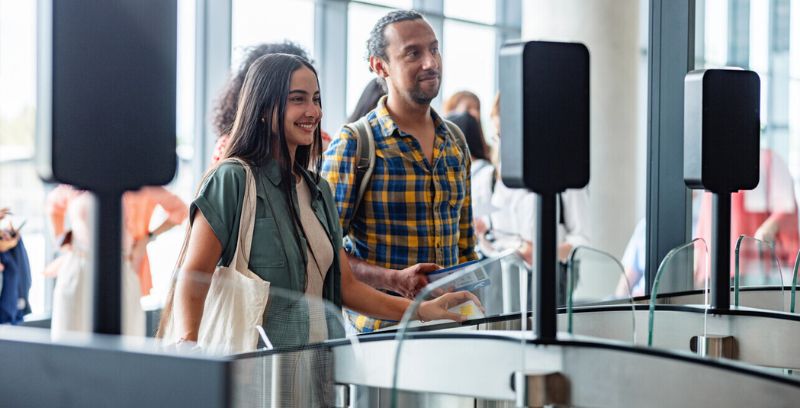
Travelers are more comfortable using biometrics at boarding gates
More than half (56%) of thetravelerssurveyedwould be comfortable using biometric facial recognition technology at boarding gates; just two in five said they would be comfortable using biometric technology at hotel check-ins. This percentage decreases to 31%at airport duty-free shops, 28%at car rental pick-ups and 28%in-destination excursions. We found thattravelersare least likely to be comfortable using biometric technology at conferences and events; only 27%found it comfortable to use facial biometric technology at such places. Just 10%would be uncomfortable using biometrics under any circumstances. The numbers revealed that the openness to biometric facial recognition depended on concerns overtravelersmixing with the general public at airports or transportation hubs like bus or railway stations.
Sentiment varies on the types of travelers
Interestingly, we saw a variation when comparing business and leisuretravelersaround where and when they would want to use the biometric facial recognition technology. For example, 55% of leisuretravelerssaid they would be comfortable using biometrics at boarding gates. It drops to 47%amongst businesstravelers. However, 33%of the businesstravelerssaid they would be comfortable using biometrics at conferences and events; it drops to 19% amongst leisuretravelers.
Looking at this data country-wise, the comfortlevelsaround biometric facial recognition technology is highest outside Europe, with 66%of the respondents in Singapore saying they would be comfortable using biometric facial recognition technology if offered at the boarding gates. It is followed by 63%of people in the UAE and 57%in India saying they are comfortable with the technology at the gates. On the other hand, while comfort is the lowest with respondents in Germany at 47%itis still a substantial percentage. There seems an openness and acceptance of health data and technology across all countries.
Finally, the datafromthe report evidenced a wider embrace from the older generations over Gen Z. For example, using biometric facial recognition technology at the boarding gates resonated with 61% of the Baby Boomers and the least with Gen Z, while only 45% agreed to be comfortable with the technology. Even when sharing and storing health data, Gen Z showed a higherskepticism, while for Gen X, Baby Boomers and Millennials it depends on who, where and when their data is being stored and shared.
Embracing technology toRebuild Travel
Understanding thetravelersentiment towards digital health data and different technologies across different markets is crucial to rebuilding travel. These insights area basisfor travelproviders to see how consumers in their markets feellocally andglobally. At Amadeus, ensuring seamless and secure end-to-end journeys for passengers is the key priority. That’s why Amadeus is developing solutions that leverage biometrics and the latest digital identity management technology to streamline the passenger experience at every touchpoint.You can findmore information on our Biometric solutions .
The global survey results provide us with cause for optimism and a pathway to rebuildtravelers’trust and confidence to take to the skies again. Learning more about their concerns around digital health data andnew technologies, we can find solutions to help alleviate their fears. As the industry comes together to make this happen, embracing technology to helptravelersget on the road again will create the confidence to travel safely and efficiently.
Contact the Amadeus airport team
TO TOP