








How Amadeus helps Air Canada rebook disrupted passengers in just 10 minutes
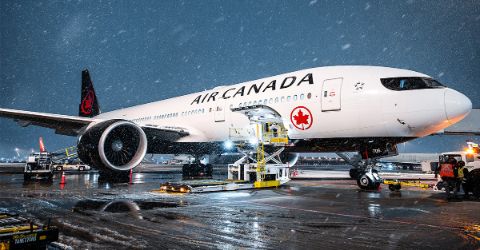
At Air Canada we operate a global ‘hub and spoke’ network that spans six continents and is served by a diverse fleet of aircraft. Despite our best efforts, like any airline, sometimes our operations and our customers face disruption.
That’s why we decided to work with Amadeus to apply modern technology to this challenge, so we can reaccommodate customers more quickly and effectively. I’m pleased to say that our standard KPI for offering Air Canada customers an alternative option when their flight is cancelled is now within 30 minutes, with most travelers rebooked just 10 minutes after receiving their cancellation notification on average. That’s down from about 12 hours when we managed cancellations more manually.
Out starting position
Air Canada migrated to Amadeus Altéa Customer Management (CM)
in 2020, during the peak of the COVID-19 pandemic, to better provide service at the more than 150 airports we fly to in normal times. This migration laid the foundation for our improvements in managing disruption scenarios, giving us access to new Altéa CM capabilities, like Altéa Disruption Transfer, which our team uses for scenarios like delays and diversions. It also laid the groundwork for our adoption of Amadeus’ Passenger Recovery
solution.
Before these upgrades, the way Air Canada managed flight cancellations was far more manual. We relied on an in-house tool that came with several limitations:
- Agents had to identify each passenger’s new recovery flight manually, which was a slow process and required the agent to have a deep understanding of our routes and schedules.
- Our in-house tool was only able to propose recovery flight options on Air Canada operated flights. Rebooking on another airline was only possible at the airport and involved 25 separate steps. This limited our passenger protection capabilities and the disruption management services we could provide.
- We weren’t able to take a strategic approach to disruptions. Our previous approach could take anywhere from 45 minutes to 12 hours per cancelled flight before solutions were found for all passengers, and this delay prevented us from taking subsequent operational decisions, like how best to rebuild our schedule and replan our crew rotation.
- Finally, the length of the recovery process also meant we weren’t able to manage mass cancellations well enough. When an issue happened at a hub, we’d end up cancelling all the flights, offloading the passengers and our colleagues at the airport and contact center would do the best they could to get customers to their destinations.
Improving solutions for customers
Air Canada is the only network carrier in North America to receive a four-star rating by Skytrax and we take customer service very seriously. We knew our approach to disruption could be improved and we wanted to deliver better solutions for our customers more quickly, whilst helping our operations teams achieve an end-to-end view of disruption.
When flights are cancelled, Amadeus’ Passenger Recovery tool now does the heavy lifting. The tool is able to propose optimal solutions for passengers quickly, even when a significant number of flights are disrupted. In a typical month, the tool proposes solutions for roughly 90% of disrupted passengers, with the remaining 10% of very complex cases handled manually by our team.
Being able to automate the recovery process was instrumental to reducing our internal KPI for offering customers a new flight option within 30 minutes or less. If the recovery flight proposed isn’t quite right for the customer, they have the option to self re-accommodate on aircanada.com, and we intend to expand that capability to our app soon too.
We use the tool in several disruption scenarios:
- Same day cancellations (when customers are often at the airport)
- Day prior cancellations
- Delays that are forecast one day prior (next day delays)
Using technology to manage ‘next day delays’ is helping us reduce the number of missed connections for customers.
Imagine a flight from Toronto to Narita Airport in Tokyo suffers a five-hour delay. That same aircraft can’t leave Narita the next day at 18:00 as originally planned and will need to depart at 23:00 instead. This has knock-on impacts for passengers travelling on the return leg back to Toronto, who may miss an onward connection to Newfoundland, the US or even Europe.
With Amadeus Passenger Recovery, we know about these missed connections in advance and the tool can either proactively rebook passengers onto later connecting flights from Toronto or move them to an alternative flight from Tokyo that gets them into Toronto early enough to make their original connection.
A more strategic approach to disruption management
Perhaps the most significant benefit Amadeus Passenger Recovery has brought to Air Canada is a complete end-to-end view of disruptions. That’s something we’ve never had before and it’s helping us take a much more strategic approach when managing irregular operations.
With technology in place, we’re able to run simulations on potential recovery plans very quickly, which means our planning managers in the Systems Operations Control centre have a clear view of the potential implications for the decisions they may take. These managers work with our crew duty managers and customer recovery team to understand issues like:
- The connections that will be missed if we can cancel a flight/s
- How much the recovery will cost
- Whether we have the capabilities to deliver the recovery, like hotels for overnight stays
They also interface with our operational control managers, who are each responsible for part of the fleet.
Simulations from Amadeus Passenger Recovery help our planning managers to collaborate with these colleagues and decide which flights to cancel or delay in a way that’s optimal for customers and the airline.
Previously we did not have such a comprehensive view, and we’d cancel a flight, and only after several hours would the recovery plan be available, by which point it’s too late. Now the recovery strategy is devised quickly and in tandem with the planning process so we’re able to identify a better overall solution.
Next steps
We’re now able to manage disruption more strategically, more quickly and in a way that delivers better solutions for our customers. We’re also more efficient. Managing flight cancellations is around 90% automated since we deployed Amadeus Passenger Recovery. Our colleagues in revenue management are happy because the recovery options we propose factor-in the various bilateral relationships we have with other carriers to limit costs for Air Canada.
Perhaps most importantly, this allows us to provide even better customer service and to mitigate the impact of disruptions. Now the recovery is planned proactively, and our customers are notified quickly, typically within 30 minutes and even during mass cancellation scenarios. But there’s still work to do.
We’re currently working to refine our use of Amadeus Passenger Recovery further by creating additional logic to handle specific groups of travelers, such as customers with disabilities and premium customers, so their specific circumstances are factored into our recovery plans.
My team is also playing an active role in the Passenger Recovery development community. We’ve learned a lot over the past few years, and we’re keen to ensure that knowledge is contributed back so the tool is continually enhanced and delivers even greater value to the industry.
For more insights about how Air Canada improved their disruption management, download our recent case study below:
TO TOP