







Fans lock in travel for football’s biggest event this summer: Amadeus data shows North America booking growth accelerates with 37% of flights booked since the draw


Airline bookings on upward trajectory – as Brits lead charge to United States ahead of kick-off
Mexico and Canada seizing hospitality opportunity as matches are confirmed
Anticipation is building as the world’s biggest football tournament hits North America this summer, with new data from transformative travel technology provider Amadeus illustrating positive momentum.
As of January 8th, Amadeus Travel Intelligence data reveals total airline bookings to the United States, Canada and Mexico for travel within the tournament period (June 5th-July 19th) are up 15% when compared to the same dates over the prior year. This includes both domestic and international travel.[1]
Following the release of the match schedule on December 6th, Amadeus data recorded a sharp increase in the number of bookings made to travel during the tournament dates, with 37% of flight bookings taking place in the month since the draw. British travelers are leading the charge, with 18% of total international bookings into the US, Mexico and Canada coming from the UK[2], as fans prepare to see their teams play.
Flight bookings made in December 2025 between Scotland and Boston, to travel during the tournament dates, reveal a 162-fold increase when compared to December 2024, as Scotland prepares for the first match against Haiti at Gillette Stadium on June 13th.
Meanwhile, Amadeus recorded three and a half times the volume of bookings made in December 2025 by England fans heading to New York/New Jersey for the period when compared to the same month the prior year. This comes as England prepare to take on Panama on June 27th in their first match.
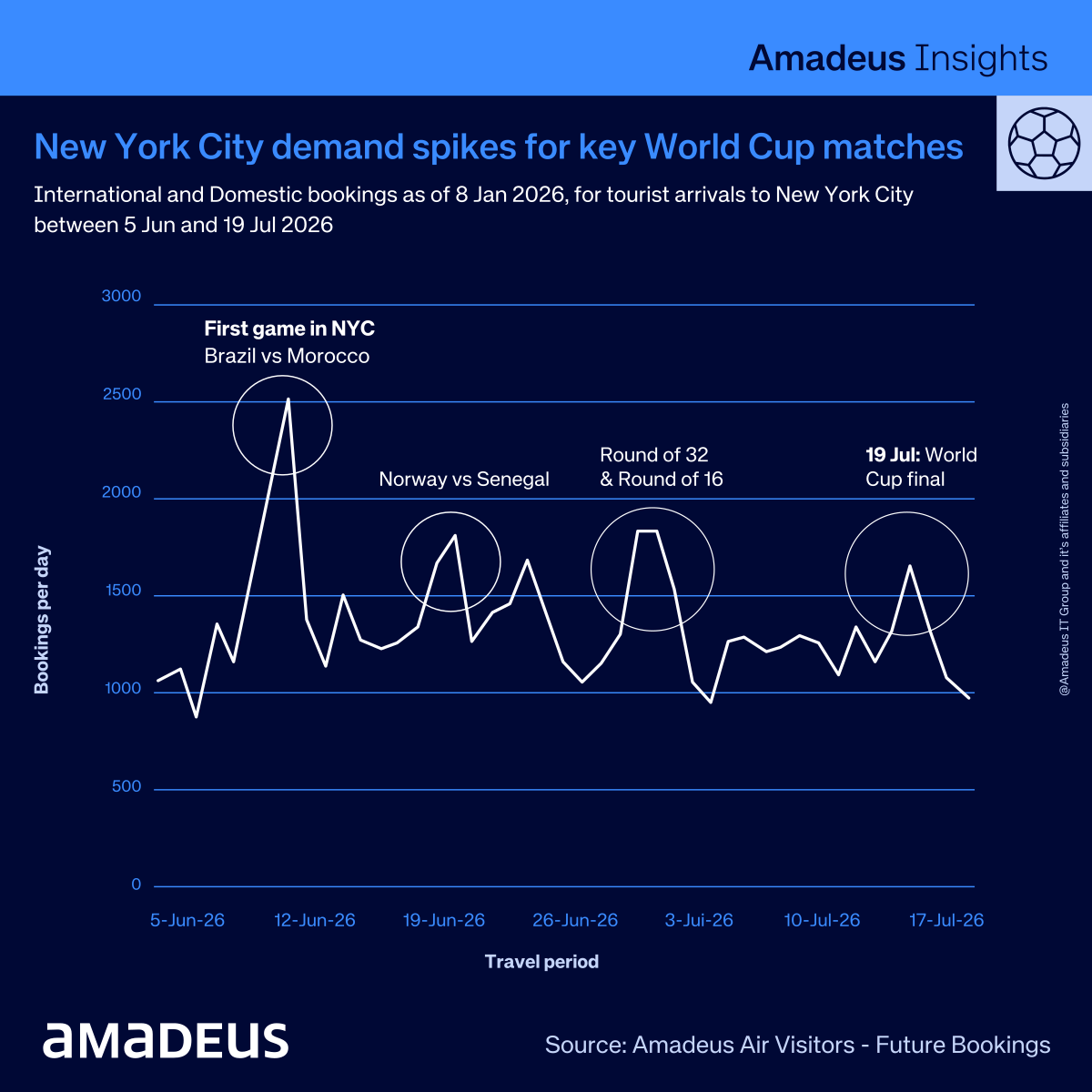
New York also looks to be among the big winners from the tournament more generally, with several spikes in air demand during the event:
Football fever spreads across North America
Taking a closer look at accommodation, it becomes clear this is a truly North American tournament, with both Canada and Mexico seeing strong increases in occupancy during the opening stages.
On the eve and day of group matches, Amadeus Demand360®data[3] shows that hotels in Vancouver are already welcoming an average occupancy of 53% this summer, sharply up from the 31% seen on comparable dates last year. In Toronto,the hotel occupancyfor its five group matches rises from 15% last year to 29% this year. These figures are also expected to increase over the coming months as kick-off approaches.
Mexico City – which will host the opening match between Mexico and South Africa on June 11th – is also anticipating a bumper summer. On the nights prior to and of the three group matches hosted in the city, average occupancy stands at 21%, up from 4% over the same period in 2025.
Similar trends can be seen in Guadalajara and Monterrey, with average occupancy rising from 3% in both destinations on comparable dates last year to 24% and 37% respectively on the eve and day of group games this summer.
As of January 7th, across the 16 venues in the United States, Mexico and Canada, average occupancy has risen from 16% to 29% on the eve and day of matches during the group stages, which run from June 11th to June 28th –signaling strong, widespread demand ahead of kick-off this summer.
“With many of the qualifying nations confirmed and fixtures taking shape, football fans from around the world are putting plans in place to visit North America this summer. Excitement is spread across the three host nations, with Canada and Mexico making the most of the opportunities in the hospitality sector. As an English national, personally I'll be backing my team and am hoping the cup will come home!"
Michael Yeomans Head of Travel Intelligence, Amadeus
[1] For this analysis, Amadeus has used MIDT data, supplied through Amadeus Travel Intelligence, to show bookings made through Global Distribution Systems that arrive during the tournament, starting from the Friday before the first match on Thursday 11 June. The data was pulled as of January 8, 2026.
[2] Bookings made between December 6 and January 8, to arrive during the tournament, starting from the Friday before the first match on Thursday 11 June.
[3] Amadeus Demand360 data was pulled as of January 7, 2026.
While each tournament draws different crowds, it’s estimated that the 2018 competition in Russia attracted over 3 million fans. The expanded 48 team format and tri nation hosting across the U.S., Canada, and Mexico this year are expected to push turnout even higher, especially when considering the volume of regional travel expected across North America.
Hoteliers can use forward looking data, such as Amadeus Travel Intelligence, to spot where fan demand is building fastest — by origin market, booking wave, and expected length of stay—so they can adjust promotions and availability with confidence. By tracking where searches outpace available rooms and when fans are likely to book, hotels can create brand awareness campaigns, release inventory strategically, and prepare for peak nights without guesswork. This helps them stay competitive while capturing the most profitable demand around the tournament.





TO TOP