-
Solutions
-
Airlines
-
Airports
-
Border Authorities
-
Corporate Travel & Expense
-
Integrations
-
Travel Sellers
-
-
Payments & e-invoicing
-
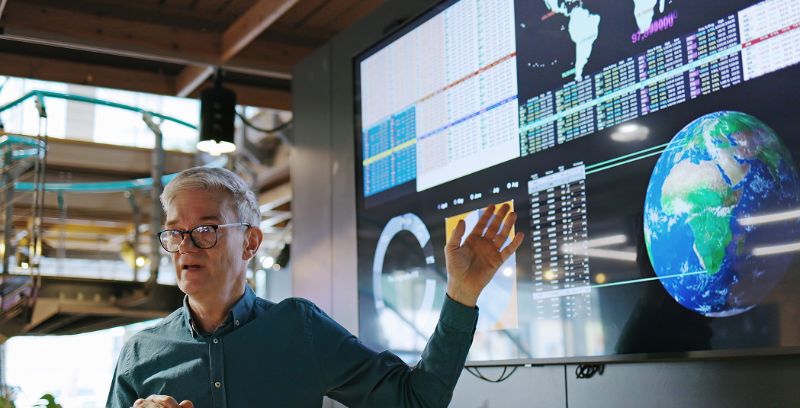 AI at Amadeus
Driving integration, scalability, trust and integrity across the travel industry.
Learn more -
-
-
Support & Training
-
 Already a customer?
Log into My Amadeus Services for product news, learning materials, and customer support.
Login
-
-
-
 Transforming travel with AI
Our partnership with Microsoft accelerates our Cloud journey and unlocks new, AI‑powered innovations that strengthen and elevate the travel industry.
Learn more -
 Landmark partnership between Amadeus and Google Cloud
Learn how this collaboration strengthens Amadeus' multi-cloud approach and AI innovation to improve efficiency, reliability and growth in travel.
Learn more
-
-
-
Trending Topics
-
 Six travel trends that will redefine how we travel in 2026 and beyond
Amadeus, in collaboration with Globetrender, unveils the tech, policy and innovation coming to transform the face of travel.
Discover now -
 Airlines in the agentic age: use cases and ideas for getting started with AI
Built on airline input, with Microsoft support, exploring real AI use cases.
Access whitepaper
-
-
Company
-
About Amadeus
-
Careers
-
Innovation
-
Sustainability
Learn how we’re working to make travel a force for good.
-
 Amadeus Global Report
Gain insights into Amadeus' 2025 business, financial performance, and sustainability.
Read the report -
-
-
How can an ecosystem approach help us understand and exceed the needs of every traveler?


Friction Removed has proved an illuminating project for all of us here at Amadeus. The report looked at many of the pain points travelers experience during a journey, and my colleagues have shed light on the implications of the findings for both the business travel and hospitality sectors.
In this closing piece in the series, I would like to spotlight one of the far-reaching takeaways from the research – namely, an understanding that every traveler is different. Each has distinctive objectives, ambitions and aspirations for a journey and frustrations that come up along the way. Whether traveling alone, with family, or for business, to a familiar destination or an entirely new one, each trip is unique.
In response, the travel industry has an opportunity to change its approach. When we understand the context of a trip and its unique parameters, we can offer a tailored selection of opportunities to each traveler, building a specific experience just for them.
Below I will explore how an ecosystem approach is helping us gradually realize this objective, as well as the way new technology can deepen our understanding of the traveler to allow for better management and servicing driven by disruption during travel. But first, let’s remind ourselves of what Friction Removed revealed about the travel experience today.
No two travelers are the same
What attributes offer insight into the preferences of a traveler – and how can this knowledge help us to understand what they are looking for in a journey?
Perhaps the most obvious metric is age, and Friction Removed found some interesting variations in how different age groups experienced pain points. For example, 35% of younger travelers (those aged 18-24) said finding what to do once arriving at their destination was stressful, compared to just 11% of travelers aged 65+. Moreover, larger percentages of the younger group also said finding accommodation, traveling from the airport to the hotel and coordinating among large groups was distressing.
It seems younger travelers, those we might expect to be more tech-savvy, actually feel a greater sense of friction during some elements of the journey. On the other hand, those over 65 are very resilient.
The purpose of a trip, whether for business or leisure, also plays a role in our understanding. For example, higher numbers of business travelers cited comparing prices across sites (44% against 39%), understanding fees and taxes (42% against 36%) and finding suitable accommodation options (45% against 33%) as very or somewhat distressing compared to their leisure counterparts.
New data to deepen our understanding
Age, wealth and the motivation for travel all play a role in our expectations, while new insights are also beginning to emerge.
Artificial Intelligence-driven tools can analyze travelers’ social media posts, reviews and comments to understand experiences and preferences, while travel sellers can monitor location-based check-ins and hashtags to track trending destinations and traveler behavior. Using loyalty programs also allows us to understand traveler preferences and spending habits, while websites use cookies to track user behavior and interest.
Of course, travelers must be fully informed of how data is being used, while security and fraud prevention are always front of mind.
An ecosystem approach
Our role at Amadeus is to harness these opportunities, understand as much as we can about a traveler and create the best trip for them. Knowing the traveler, how they handle unexpected disruption and challenges during a journey, and addressing their individual needs matters. If we can understand their motivations, preferences and more, we can build better journeys.
The best way to do this is across a wide-ranging ecosystem, bringing together as many players as possible. Through a collaborative approach with our partners, we work to transform the end-to-end traveler experience.
Our technology supports airlines on their journey of modern retailing, creating simpler, more personalized trips. For airports, it opens the doors to simplification and optimizes valuable space at terminals. For travel sellers, it means more efficient corporate and leisure booking and payments processes. For hotels it means gaining insights to drive profitable demand and decisions, while delivering differentiation and loyalty to guests.
While every traveler is different, taking an ecosystem approach brings together the best combination of leading organizations, from startups to large enterprises. Together we can harness new possibilities, reduce friction and build better experiences for all.
TO TOP