






Building in the open: Why open source matters at Amadeus


In this article...
- Why open source has become central to how Amadeus builds and operates cloud native technology.
- How Amadeus contributes back to the community, including the story behind Perses and its journey into the CNCF.
- What comes next as our teams explore new Kubernetes-related contributions and keep collaborating in the open.
Editor's note: This article was originally published on LinkedIn by Luc Choubert in March 2026 and has been republished here with minor updates.
The cloud native world has been intrinsically linked with open source from the very beginning. It grew out of the Linux philosophy, its ecosystem, and the way it enabled containerized workloads, with each new layer built and shared for the common good.
Five years ago, we chose to build on that foundation and made a strategic decision to move to the cloud. As part of this transition, we deepened our engagement with the open source ecosystem and negotiated key partnerships with leading industry players.
Since then, we have significantly increased the usage of open source. Moving to Kubernetes marked a major shift for Amadeus as we switched from VM‑based workloads to a cloud native stack built on containers. OpenTelemetry, Prometheus, Thanos, and other projects have become essential to our toolchain and now serve as standards across the cloud native ecosystem.
How Amadeus contributes to open source at scale
This strategy required our engineers to understand and customize open source projects, while often committing improvements back to them.
Since relying on open source involves active participation and shared responsibility, it is not something we simply take off the shelf. It is something we are partly responsible for.
This way, we have been able to focus on contributing where it matters most to continue delivering value to our customers and support the wider community.
Our growing expertise in open source comes from a strong culture of collaboration and shared responsibility, which helps us improve how we build and operate our systems. This mindset is anchored in the Amadeus Open Source Manifesto, a set of principles that guides how we use and contribute to open source in a responsible way, encouraging our teams to share knowledge, support communities, and make open source part of our everyday work.
Perses, a CNCF open dashboard solution
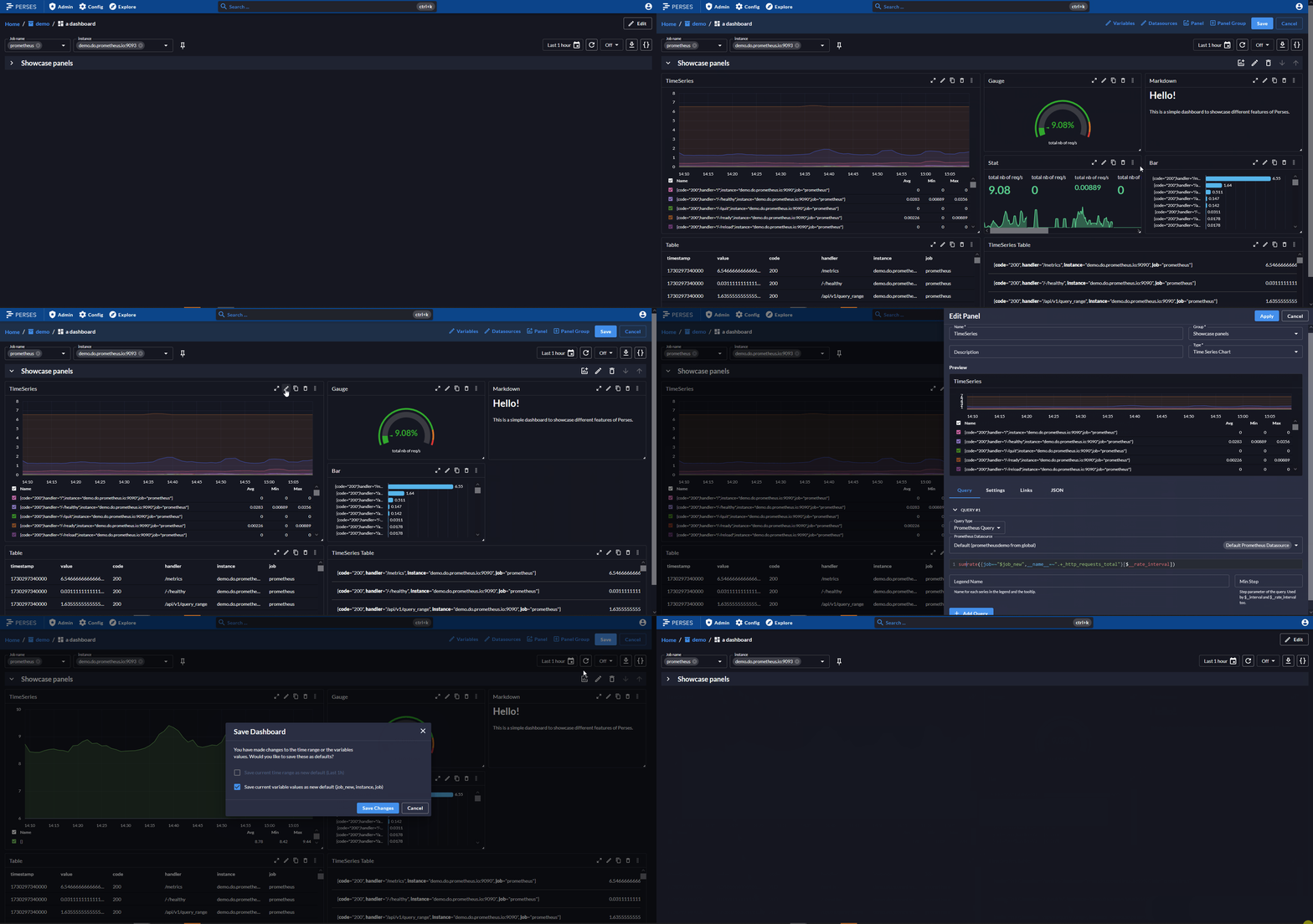
Consequently, Amadeus has been increasing its contributions to open source projects ever since. For example, we are one of the top contributors of PersesDev, an open dashboard solution under the Cloud Native Computing Foundation (CNCF) that originated in the Amadeus R&D department and grew into a project helping the wider community.
Perses is a CNCF sandbox project that provides a practical, Kubernetes-native dashboard tool for observability data such as Prometheus, Tempo, VictoriaLogs, and Pyroscope, while also driving standardization through an open dashboard specification and extensible, GitOps-friendly tooling.
This all began with the large‑scale deployment of Prometheus, an open source toolkit for collecting and analyzing system metrics, when we quickly faced a challenge: managing thousands of dashboards. Existing approaches such as Jsonnet didn’t meet our scaling needs, and the Grafana data model made it even more complex. We needed something simpler, more GitOps oriented, and easier to manage at scale.
This led us to design a clean, human readable data model and a dedicated dashboard-as-code framework with supporting SDKs, which became the foundation of Perses.
We later donated the project to the CNCF, which accepted it, as we believed it was a missing piece in the observability landscape. This has since been confirmed by its growing adoption, a steadily expanding contributor community, and its integration into the ApeiroRA reference architecture, an open reference blueprint led by SAP. Like ApeiroRA, Perses is part of Europe’s cloud-edge continuum 8ra initiative, in the scope of the Amadeus’ RESCUE project.
Now, this momentum is reaching wider production environments, with Perses available as part of the Red Hat OpenShift observability stack. Moreover, we are working to roll out the general availability (GA) version across Amadeus.
Looking ahead, open source and Kubernetes contributions
Collaboration with others has turned out to be more effective and engaging than creating and implementing projects on our own.
Following the success of PersesDev, we are now exploring additional Kubernetes‑related contributions, including work on intent‑based approaches for managing the network. We are also continuing to collaborate with leading technology partners around shared ideas and common interests.
Together, these efforts show how open source has become a part of the way we build, collaborate, and innovate. And as we keep contributing and working with others, we strengthen both our technology and the communities that help shape it, which ultimately supports the delivery of resilient, scalable, and cost-efficient solutions for our customers.

TO TOP