







Driving digital transformation in the mobility industry
.png/_jcr_content/renditions/cq5dam.web.480.320.png)
Digital transformation in mobility is being driven by the building of new connections.
For too long, mobility has sat in silos. Flights and hotels are often booked first, then a rental vehicle or transfer is added manually, often on a separate platform.
No single provider can fix this alone.
Car rental companies, transfer operators, travel sellers, and technology providers must all come together to build journeys that feel seamless from door-to-door.
The appetite for this is clear. Amadeus research, Global Mobility Trends: Decoded. Traveler Insights 2026, shows that 87% of travelers find door-to-door journey coordination services useful, and 68% say they are likely to use an AI-powered travel assistant. Traveler behaviors are changing at every stage of the trip, from how ground transport is planned and booked to how it is experienced at the destination.
Here digital transformation in mobility is mapped out, looking at where friction sits today and the technologies reshaping how travelers will move tomorrow.
What does a digital-first mobility sector look like?
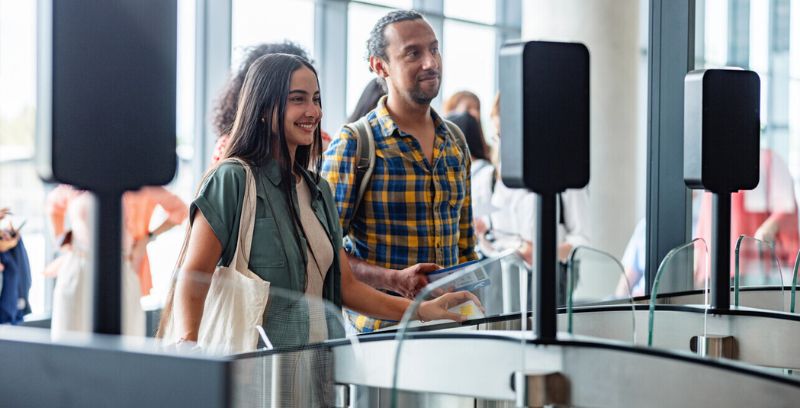
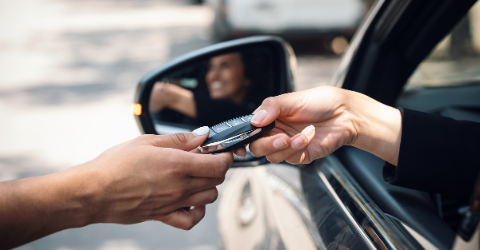
Picture a traveler landing in a new city. Biometric technology has already verified their identity at the airport, and that validation flows through to their car rental provider. License, passport, and payment details were checked digitally before departure, the rental agreement was signed on mobile, and they walk straight past the counter to a waiting vehicle.
This is the direction the industry is moving in.
Amadeus is actively working with companies across the ecosystem to digitalize the car rental experience, from document validation to counter-free pickup. But these connections run deeper than the pickup moment. In a digitally connected mobility industry, car rental and transfer content sits inside the wider booking flow rather than on separate platforms, with real-time availability and transparent pricing across global, multinational and local providers. Loyalty status travels with the customer, so providers can recognize members and tailor offers wherever the booking is made.
Travelers are ready for this exchange.
Amadeus research shows 47% would share their license details in advance to speed up car rental, and 40% would share passport or ID information. When people understand how their data will be used and see the benefit, they willingly share.
Challenges in the digital transformation of mobility
What limits the digital transformation of the mobility sector today?
Fragmented data: Identity checks completed at the airport do not currently flow through to the car rental desk or hotel check-in, so travelers repeat the same validation steps at every stage of the trip. Booking information sits in separate systems, forcing travelers to re-enter details across platforms. Until data moves with the traveler, the end-to-end experience will stay disjointed.
Limited commercial impetus: Stakeholders have sought an advantage by keeping content and customer relationships in owned channels. Integration asks providers to share control for a better collective experience, requiring a mindset change as much as new technology.
Outmoded processes: Much of the rental journey still happens on paper and in person. Documents are checked manually at the counter, and rental agreements are signed on arrival. Queues remain a fact of life, with 21% of travelers citing them as a pain point. Digital document validation, online check-in and skip-the-counter pickup exist, but they are not yet the industry standard.
Uneven traveler trust: Willingness to share the personal data that powers seamless journeys varies significantly by region. Providers have to earn that trust market by market, being clear about what they collect and what travelers get in return.
Building a seamless vehicle rental experience
Travel has become more destination-centric and experience-led, and that shift has changed the role of ground transport. Travelers increasingly value the freedom to move easily once they arrive, particularly on leisure trips and in destinations where experiences are spread across a wide area.
Planning no longer stops at how to get there; it extends to how to move throughout the stay. Mobility has moved from an optional, secondary purchase to an essential component of the modern journey, and a central enabler of multi-modal, end-to-end travel.
The opportunity is expanding, too.
Amadeus’ analysis of the future of the car rental industry shows that demand continues to grow, driven by changing traveler behavior, new business models, and rising expectations for seamless digital experiences.
The industry is evolving in response to travelers who expect mobility options to be accessible, transparent, and integrated into the wider booking process. Providers that meet those expectations are positioned to capture a larger share of a growing market.
Wider technology trends accelerate mobility transformation
The digital transformation of mobility is being accelerated by wider changes to the technology landscape:
Artificial Intelligence: AI is the connective layer that makes journeys personal at scale, powering assistants that help travelers plan, book and manage mobility in real time. Hyper-personalization and real-time accuracy are no longer optional, and the winners will be brands that integrate deeply enough to meet travelers wherever they choose to book.
“In the short and medium term, the biggest advantage of AI is that it will significantly streamline search, making it easier for travelers to find the best transportation option for their trip and add it to their itinerary in one go. Today, comparing a car rental, a prearranged transfer and an on‑demand service is still a very manual process.”
Peter Altmann Vice president, Mobility & Travel Protection, Amadeus

Cloud technology: The move to the cloud brings content from global, multinational, and local providers into one place, with real-time availability and standardized data that makes genuine comparison possible. Flexible, scalable APIs let travel sellers plug mobility directly into their platforms, so live updates reach the traveler wherever they booked.
Biometrics: Biometric identity validation is already established at airports, and the opportunity is to let that verification flow through to car rental and beyond. Travelers skip repeated document checks and queues, while providers gain confidence that the person collecting the vehicle is the person who booked it.
“Biometrics is the other big opportunity. We are seeing biometrics used more and more at airports, and if the identity of a traveler has already been validated there, that should flow into the car rental process and even beyond, into hotel check‑in. It makes the experience more seamless for the traveler and reduces risk for the provider. No single company can do everything, so partnerships, and the data they unlock, will become more and more important in enabling all of this."
Peter Altmann Vice president, Mobility & Travel Protection, Amadeus
What does transforming mobility mean for travelers?
For the traveler, digital transformation in mobility will be felt in three places - before the trip, during it, and after.
Before departure, ground transport will cease to be a separate experience. Mobility options will appear alongside flights and hotels in a single booking flow, with clear pricing and real-time availability across providers. An AI-powered assistant helps travelers plan, compare and book. Personalized experiences will draw on stated preferences to present the right vehicle, transfer or transit option without the traveler having to search for it.
During the trip, the experience becomes proactive rather than reactive. Real-time alerts flag disruption before it becomes a problem, and if a flight is delayed, that information flows automatically to the rental provider, so the car is held. Online check-in and skip-the-counter pickup, among the services travelers most want according to Amadeus research, remove the queue entirely. Support is available in the traveler's own language, addressing the single biggest pain point in mobility today.
Looking further ahead, autonomous vehicles reshape the pickup itself. Rather than traveling to a rental office, the car comes to the traveler's home or hotel, on demand. Nearly half of travelers already say they would consider autonomous vehicles, and openness is even higher among Gen Z and business travelers.
After the trip, loyalty follows the traveler rather than living inside one provider's app. Points earn and redeem across transport modes, offers arrive in real time during travel, and rewards reflect actual behavior.
The thread running through all of it is that the traveler stops managing logistics and starts experiencing the destination. The technology recedes into the background, and the journey simply works.
Digital transformation will refine the mobility experience – and Amadeus is working with partners from across the ecosystem to bring new realities to life.







TO TOP