







Working alongside our partners at Microsoft, Amadeus recently launched a new report exploring the changing technological landscape of the travel sector. At the center of Delivering Traveler Value: Inspiring, understanding and fulfilling expectations throughout the travel experience and beyond was an examination of how a renewed focus on the ‘purpose’ and ‘context’ of each trip will allow us to maximize value – both for the industry and for the tr
Working alongside our partners at Microsoft, Amadeus recently launched a new report exploring the changing technological landscape of the travel sector. At the center of 'Delivering Traveler Value: Inspiring, understanding and fulfilling expectations throughout the travel experience and beyond ' was an examination of how a renewed focus on the ‘purpose’ and ‘context’ of each trip will allow us to maximize value – both for the industry and for the traveler.
Today, I would like to explore the topic a little further and offer insight into the new products and solutions that will create the travel experiences of the future.
Demand for change
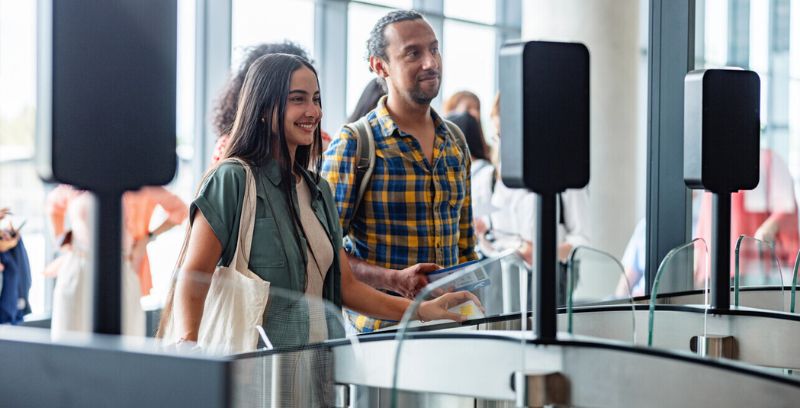
Right now, travel too often remains a succession of waiting times, and it is clear our industry must continue to evolve. Travelers increasingly expect end-to-end, digital and frictionless experiences, experiences we are only beginning to deliver.
If the pace of change does not accelerate, there is a risk travelers may turn to alternatives. Sustainability concerns are increasingly important, while rising costs place ever more emphasis on maximizing the value of a trip. At the same time, new possibilities, from remote work to virtual reality, continue to gain acceptance.
Demand for change is rising.
Gains to be made
In this new world, an understanding of context has become more important than ever. Travel companies need to know the purpose of each trip, in order to understand what motivates a traveler to make the choices they do.
Context will allow industry stakeholders to understand if a traveler is at home, at work, already abroad or in the office, as well as with whom they are traveling. This visibility will let travel providers understand what a traveler is doing, be it a conference, meeting or holiday, as well as where they should be right now, perhaps in the office or on the way to the airport.
With this understanding, the industry will be able to make suggestions that significantly improve the travel offering. From the inspiration phase, through the entire journey to the destination, enhancement is possible. While personalization is able to use what the industry already knows about a traveler and their previous experiences, contextualization is able to draw on (near) real-time information from multiple sources to create new options, a deeper understanding.
With contextualization, we are working to mimic an interaction with a human, while using a machine. Currently, machines lack the context around a trip, they cannot understand why you are trying to do something. A human would ask clarifying questions, draw inferences and use other tools – that is what we are attempting to achieve.
The solutions will therefore be able to offer options you may not even have known existed – this is the next frontier of technology.
Travel experience
Contextualization will allow the industry to enhance the human element of an experience. Imagine a traveler arriving at a hotel after a long journey. They may already have a digital key to access their room, allowing them to bypass reception.
For travelers looking for efficiency, this might be ideal, but those looking for the human touch may require a different style. A contextualized approach might deliver a prompt inviting the latter traveler to the bar for a welcome drink or a chat with the concierge about what to check out locally.
How about onboard a plane? Using NDC, if a traveler selects extra leg space each time, they can be offered it automatically, rather than having to manually select the option. Or, how about if several business travelers are arriving at a similar time and location? They can be offered the chance to share a ride from the airport to their destination.
There are many possibilities.
The more the industry understands a traveler and the more data that can be actioned in real time, the better the offers that can be made. Not only does this improve the experience, but it can allow travel sellers to differentiate their offering and drive revenue growth as new opportunities are created.
New tools
For business travelers, the recent introduction ofCytric Easy offers a glimpse of what comes next. The tool allows users to search, book, pay and expense for business travel within the Microsoft 365 productivity tools they use every day, like Microsoft Teams. Another example is ShareMyTransfer, the latest feature we introduced in Cytric Easy. It makes it easier for collaborators to share rides at destination and enables both corporations and business travelers to adopt responsible and sustainable behaviors. Thanks to this, colleagues can share trips and rides together.
With the new approach, employees are empowered to focus on the objectives of a trip, rather than being bogged down planning complex logistics.
As the sector develops its contextual understanding, more data will be needed, more quickly, while insights are developed and actioned. If the industry is going to be able to meet the evolving needs of the traveler, it must have the tools to do so.
Amadeus and Microsoft are offering their support, building these traveler-centric solutions.
Interested to know more Amadeus products and solutions that will create the travel experiences of the future? Read the full report below, and if you're interested to learn how you can start reaping the benefits too, feel free to get in touch with me onLinkedIn !
TO TOP