
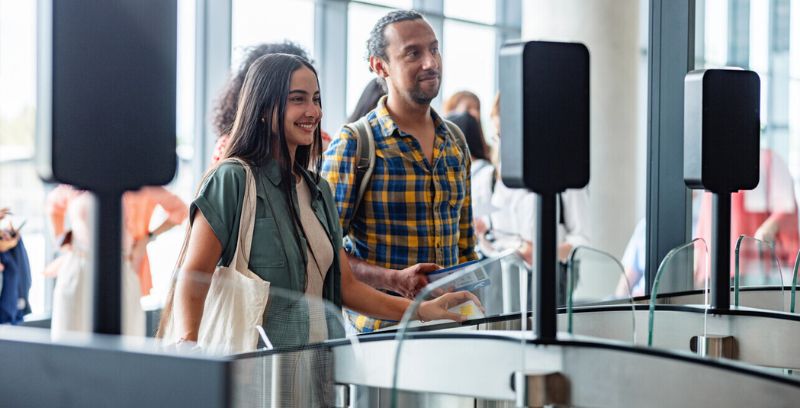









Welcoming input from more than ten thousand travelers in 15 countries and 22 experts from different fields, Traveler Tribes 2033 offers us a detailed look at how our industry might evolve over the coming decade.
Welcoming input from more than ten thousand travelers in 15 countries and 22 experts from different fields,Traveler Tribes 2033 offers us a detailed look at how our industry might evolve over the coming decade.
The report seeks to anticipate the evolution of the travel sector, aiming to deepen our understanding of the attitudes, motivations, and behaviors of the traveler of tomorrow.
A clear theme that emerged during the development is that sustainability will be a fundamental driver of change over the next decade. As the industry seeks to reduce its negative impact on the environment, a search for more sustainable solutions has the potential to transform every facet of how we travel.
Indeed, the chance to travel more sustainably is 35 per cent of travelers’ main source of excitement for travel in 2033, according to the report.
However, Traveler Tribes 2033 highlighted some concerns travelers have around sustainable travel, including higher cost and the speed of journeys. Some 34 per cent of participants are concerned that more sustainable travel will cost more, while 63 per cent say they are not willing to pay more for a flight with biofuel, for example.
So, what else can we expect over the next decade – and how can we build a more sustainable industry?
Approach to sustainability
First, we must be clear what we are discussing when we talk about ‘sustainability’.
During the development of Traveler Tribes 2033 we sought to take the broadest possible approach to Environmental, Social and Governance (ESG) concerns – allowing both participants and readers to interpret the term ‘sustainability’ as widely as possible.
While many chose to focus on environmental sustainability, cutting emissions from aircraft for example, the term is much wider. Social sustainability can include benefits of travel like thriving destinations, preserving and promoting cultural and natural heritage, or investing in locally sourced produce and hospitality resources.
Truly sustainable travel can encourage greater wealth distribution, bridge cultures and improve equality. Amadeus is keen to widen the understanding of sustainability in our industry, driving adoption wherever possible.
The say-do gap
While there is a willingness to seek sustainable travel among the Traveler Tribes 2033 cohort, there is a gap between what travelers say they are willing to do and what they actually will do to make sustainable travel a reality.
One Traveler Tribe is of particular note here, theTravel Tech-fluencers. In terms of sustainability, 82 per cent of this group say sustainable solutions dictate their decisions. However, that is only until sustainability inconveniences them by having to invest a significant amount of their own time or money to do so.
For example, Travel Tech-fluencers are willing to pay more for biofuel flights, but, according to the research, they will likely be traveling for business. This means that they will not be the ones paying. Eco-hotels are also of interest, but they will not accept any fall in hospitality standards.
As a result, there is an opportunity for the travel industry to play a role in overcoming this ‘say-do gap,’ empowering travellers by providing them with more information about the environmental impact of a trip and giving them options from which to choose how to take action to reduce this impact.
Hope for the future
Luckily, help might be at hand in the form of the Pioneering Pathfinders , thethe largest Traveler Tribe, composing 43 per cent of all respondents. This is the group which most values sustainable travel, with sustainability 20 per cent more likely to dictate their decisions compared to other Traveler Tribes.
Comparatively young, the Pioneering Pathfinders have above average incomes and live fast-paced lives, always looking for their next big adventure. Relatively settled, with two thirds living with a partner and children, they are a forward-looking Traveler Tribe, with many owning virtual reality headsets and smart speakers. Open to calculated risks, they may also have invested in stocks, NFTs and cryptocurrency.
In short, this is a socially progressive group of people, and we hope leading by example, they can encourage other Traveler Tribes to follow their lead toward a more responsible, more sustainable future. If this group can demonstrate sustainable travel can be cost-effective or worth investing in, quick and simple, they are well-positioned to drive wider adoption.
What this means for the travel industry
One thing made clear by Traveler Tribes 2033 is that different groups of travelers will need different motivations in order to nudge them to adopt the sustainable behaviors in the future. So, what can the travel industry do to speed up the transition?
While there will be many contributing factors to achieving net zero, the affordable, widespread use of sustainable aviation fuel (SAF) would be a key area of focus. With the potential to significantly reduce aviation emissions, this new fuel source is likely to play a key role in the transition. But our research suggests that it must be deployed at scale, and at an affordable price for travelers, in order to drive adoption.
Another avenue for exploration regarding environmental sustainability is inspiring more conscious search habits. This can be achieved by incorporating CO2 emissions information at the booking stage as well as promoting multimodal travel, both of which can encourage travelers to prioritize options that have less of an environmental impact.
Sustainable travel
Different motivations will drive the Traveler Tribes toward more sustainable travel, overcoming varying levels of skepticism, knowledge and income. But this is a generational challenge, with no single answer.
While the Pioneering Pathfinders are likely to make sustainable travel more attractive by their example, as an industry we must overcome the say-do gap demonstrated by the Travel Tech-fluencers by making adoption as easy as possible.
If we can make or contribute to make sustainability travel quicker, easier to access, and affordable the rewards could be vast.
TO TOP