-
Solutions
-
Airlines
-
Airports
-
Border Authorities
-
Corporate Travel & Expense
-
Integrations
-
Travel Sellers
-
-
Payments & e-invoicing
-
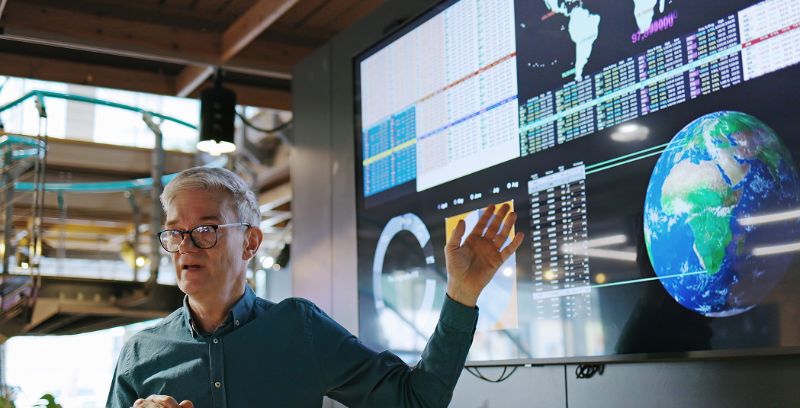 AI at Amadeus
Driving integration, scalability, trust and integrity across the travel industry.
Learn more -
-
-
Support & Training
-
 Already a customer?
Log into My Amadeus Services for product news, learning materials, and customer support.
Login
-
-
-
 Transforming travel with AI
Our partnership with Microsoft accelerates our Cloud journey and unlocks new, AI‑powered innovations that strengthen and elevate the travel industry.
Learn more -
 Landmark partnership between Amadeus and Google Cloud
Learn how this collaboration strengthens Amadeus' multi-cloud approach and AI innovation to improve efficiency, reliability and growth in travel.
Learn more
-
-
-
Trending Topics
-
 Six travel trends that will redefine how we travel in 2026 and beyond
Amadeus, in collaboration with Globetrender, unveils the tech, policy and innovation coming to transform the face of travel.
Discover now -
 Airlines in the agentic age: use cases and ideas for getting started with AI
Built on airline input, with Microsoft support, exploring real AI use cases.
Access whitepaper
-
-
Company
-
About Amadeus
-
Careers
-
Innovation
-
Sustainability
Learn how we’re working to make travel a force for good.
-
 Amadeus Global Report
Gain insights into Amadeus' 2025 business, financial performance, and sustainability.
Read the report -
-
-


Last year, the investment from Amadeus Ventures in CAPHENIA, the future sustainable aviation fuel (SAF) producer, was a strong example of our commitment to work with other industry players in addressing global climate change and to help on the journey towards a more sustainable and responsible travel industry.
For three decades, we have worked with airlines as a distribution partner and as an IT service provider. We have also developed a strong relationship with airports around the world, helping them to respond quickly to an evolving landscape, drive profits, and operate with greater efficiency. And working with both areas in tandem, we have been exploring how we can facilitate the travel experience by fostering greater collaboration between airports and airlines.
CAPHENIA – and its SAF production peers – sit at the intersection of some of the key sustainability interests for airlines and airports. By getting close to CAPHENIA, we intend to develop deeper insights into SAF to help inform our ongoing evaluation on how we can support the adoption of SAF in the mid- to long-term.
The role of SAF in helping airlines to reduce their environmental impact will be pivotal.IATA’s net zero roadmap states that SAF “could contribute around 65% of the reduction in emissions needed by aviation to reach net-zero in 2050”.
As things stand, there are planes in the sky using SAF today, albeit on avery modest scale due to limited availability, and the number of airlines committed to buying SAF (known as offtake agreements) isgrowing rapidly .
It is therefore a good time to assess where we are with SAF now, to get a better idea of where we need to go.
The reality is that SAF production in 2022 stood at just 300 million litres, less than 0.1 per cent of theestimated 449 billion litres needed for SAF to reach the 65% contribution.
There are different ways of producing SAF, and the vast majority of SAF in use today is produced using a process known as HEFA. At the risk of oversimplifying very complicated processes, HEFA converts cooking fat and animal waste (biomass) into fuel.
In contrast, CAPHENIA employs a globally patented Power-and-Biogas-to-Liquid process to transform CO2 and biogas – produced by anaerobic digestion of organic matter in an oxygen-free environment – into renewable fuel.
Caphenia has plans to produce 10 million litres of SAF by 2027, to increase production to over 100 million litres by 2030 and to surpass one billion litres before 2035.
The benefit of both types of SAF is that they can be “dropped-in” or blended with fossil-fuel-derived aviation fuel in existing engines and propulsion systems without costly conversions or new infrastructure at airports.
This is where SAF has an advantage over other airline innovations, such as hydrogen and electric powered aircraft, which require resources and time to be built or to be adapted from existing aircraft. That said, IATA thinks thesecould contribute 13% of the reduction needed for net zero by 2050, and the technology for these planes is currently being developed by leading aircraft manufacturers, supported by start-ups, scale-ups and research institutions. To reach the goal of net zero, as an industry, we’re going to need to explore all routes simultaneously as they contribute to the same goal.
As with many aspects of addressing global climate change, the required scale-up of SAF volumes will be based on partnerships and collaboration between all stakeholders – fuel producers, aircraft and engine manufacturers, technology providers, investors, industry associations, governments, regulators, airlines, airports, travelers, travel sellers and more.
By investing in CAPHENIA, Amadeus gets enhanced visibility into the challenges of the SAF sector. Over time our knowledge base will grow, and our experience and expertise across the entire travel ecosystem will help us to play our part in helping aviation achieve its target of net zero by 2050.
TO TOP