





With the makings of a dystopian science fiction fever dream, the year 2020 is one few of us are likely to forget anytime soon. But as we’ve seen time and again, crisis breeds innovation, agility and resilience. With promising news of a vaccine on the horizon, and this troublesome year coming to a close, it seems like a good moment to pause and reflect on the last few months. What are the lessons we’ve learned during the most disruptive year in t
With the makings of a dystopian science fiction fever dream, the year 2020 is one few of us are likely to forget anytime soon. But aswe’ve seen time and again, crisis breeds innovation, agility and resilience. With promising news of a vaccine on the horizon, and this troublesome year coming to a close, it seems like a good moment to pause and reflect on the last few months.
What are the lessons we’ve learned during the most disruptive year in travel history? How did we recalibrate and adapt to unprecedented times? We’ve gathered our takeaways as we leave 2020 behind us, with lessons we’ll be taking with us into 2021 and beyond.
Travel agents’ value proposition is clearer than ever
If there’s anything travelers learned this year, it’s that travel agents are an important component in the case of a storm. Anyone who tried to cancel or reschedule travel plans without a travel agent in 2020 might rethink it in the future. In addition to travelers’ preferences when researching and booking travel, they’re also now focused on hygiene and sanitation practices, government travel restrictions, and cancellation policies – there are more considerations and information required than ever before. As travel picks up again, travel agents need to act fast to capture this opportunity.
The road to recovery is paved with content
The first step for travel agents, and also corporations, will be ensuring they have access to a plethora of rich and diverse content. NDC is a key part of this. NDC is designed for the digital age, allowing modern retailing techniques in the travel sellers channels, that are already available to online retailers in many other sectors. Imagine being able to share instant alerts with rich content, including photos and videos, showing the latest information to passengers - such as when the plane was last cleaned.
We’re not just talking about air – now more than ever business and leisure travelers will want access to rail bookings, insurance options, car rental companies, safe in-destination activities and hotels in unexpected locals beyond the typical bustling travel hubs.
Developing an Omnichannel Strategy
According to our research, 60% of consumers start shopping on one device and then switch to the next. And on average, accommodation bookings last 36 days and involve as many as 45 touch points across different devices and websites. We’re all a bit scattered across devices, websites and touchpoints. To reach customers, travel sellers and corporate travel managers need an omnichannel strategy that meets travelers wherever they are, whenever they want.
Digital Transformation
Companies will need to automate as many manual tasks as they can, so they can focus on what matters most: the traveler. Additionally, it will be crucial for organizations across the globe to have the right tools and data available for ensuring everyone’s safety and well-being – likeAmadeus cytric Travel & Expenseand Mobile Messenger.
Amadeus Ticket Changer (ATC) Shopper, for example, allows travel agencies and corporations to offer their travelers the possibility of exchanging their tickets in a few seconds from their mobile phone or tablet with no hassle. To streamline problem solving,our chatbot Amanda helps agentsall over the world in multiple languages via Amadeus Selling Platform Connect with everything from flight availability, to flight waitlists, how to purchase ancillaries, or how to reserve vegetarian food. Whatever bookers need, chances are she has the answer, and if she doesn’t, she’ll connect with a human who does.
Key Takeaways: wisdom from above
“Over the last couple of years, the travel industry has been going through an abundance of change and digital transformation. This has not been a revolution, but rather a gradual evolution to meet the needs of savvy travelers and to leverage the latest technology and innovations that are transforming society as a whole. COVID-19 has just accelerated this. And it’s time to double-down and focus on what’s important for travelers and for business to get through this crisis and come out stronger. Leveraging the skills of people and technology will ultimately allow the industry to deliver more personalized journeys to meet travelers’ needs and exceed their expectations.”- Angel Gallego, Executive Vice President, Travel Channels, Amadeus
Airlines: Adapting at warp speed
In the world of airlines, there is no doubt that 2020 has seen unprecedented levels of disruption., Despite the challenges, many airlines have not lost sight of their customers and in fact have adopted exciting new developments in digital retailing and automated solutions, and revenue management systems to help navigate through changing travel demand.
How our Revenue Management System (RMS) adjusted on the fly
As Amadeus was in the midst of deploying anew RMS system for Alaska Airlines, COVID-19 presented a unique challenge: months of cancelled flights left holes in RMS’ historical database, while customer booking and cancellation patterns along with their willingness-to-pay abruptly and significantly changed. This meant we had to adapt and find a new solution quickly - so we developed a novel demand forecast that we call Active Forecast Adjustment (AFA), which can quickly adapt to changes in market demand.
Beyond the pandemic, AFA’s principles allow airlines to react to market changes and increase forecast adaptivity while retaining robustness and stability. As airlines are struggling with the fallout of COVID-19, a reliable RMS is more critical than ever and holds significant revenue potential:research suggeststhat even a 10% increase in forecast accuracy can lead to a 1% gain in revenue. Just askAlaska Airlines: despite COVID-19, their RMS system was deployed on time with no hiccups.
The future of retailing
Airlines can’t afford to miss a single opportunity to get back on track to growth, and many have wasted no time in upgrading their digital retailing strategies. In 2020,Japan AirlinesandAir France-KLMboth announced innovative NDC distribution deals with Amadeus, whileTurkish Airlinesupgraded its digital infrastructure by becoming the first airline to adopt Massive Search, so that travelers can find consistent, accurate and fast responses across all channels, andAviancaworked hand in hand with Amadeus to design a new digital booking flow on its website.
Meanwhile in October,Amadeus expanded its partnership with Adobeto make digital retailing even easier for airlines, by integrating Adobe Experience Manager into Amadeus’ Digital Experience Suite. This means that airline marketeers and analysts can rapidly shift retail strategies and create dynamic promotions in a just a few clicks.
Making Disruption less Disruptive
Until recently, it was unnecessarily difficult for agents to rebook passengers initially scheduled for a Vueling flight, onto a British Airways flight. Although the two airlines are partners, British Airways is a ticketing carrier, while Vueling is primarily a ticketless carrier so they need to interline –but try explaining that to a frustrated traveler in times of disruption.
In just three months, a team working across four organizations achieved a series of important milestones to make interlining simple and streamlined, even during disruption:by the end of the project, a client app enabled agents to rebook Vueling customers onto British Airways flights in just three clicks and less than three minutes.
Key Takeaway: wisdom from above
“COVID-19 has shaken the travel industry to its core. Our priority has been to support airline customers through a time of profound disruption. We have seen COVID-19 accelerate trends that were already present, such as the drive towards digitalization, innovative retailing and automation. These are areas that we are already working closely on with our customers through our simple, agile and open approach, and we will continue to place top priority on this in order to restart and rebuild the industry in a way that is better than before.”- Decius Valmorbida, President, Travel Unit,Amadeus
Hospitality is on the cusp of a new era
The emergence of the “Generation Clean”
The emergence of COVID-19 has made even the most relaxed traveler concerned about cleanliness, and that’s not likely to go away even after the virus disappears. Along with early check-in and on-site amenities, cleanliness and disinfection procedures are now going to be one of the defining features “Generation Clean” travelers will look for when booking a hotel. Hotels must establish clear cleanliness and sanitation policies and make them visible: from the time a traveler books a room to the time they check out, hygiene practices should be visible in signage and in practice. The most successful hotels will make cleanliness part of their brand.
Data is the new frontier of hospitality
During unpredictable times like these, historical data is no longer relevant – hoteliers need dynamic, up to date insights to drive a recovery strategy. Hoteliers that can unlock the power of guest data will be ideally positioned to create lasting, meaningful guest relationships and ultimately drive recovery and future growth. That’s whyAccorandHilton Hotelspartnered with Amadeus to provide forward-looking occupancy data their properties.
Unlocking 360-degree guest view to drive loyalty
For many years, "personalization" has been a buzzword in the industry, but it’s not a reality for most hotel guests. Much of the challenge originates from core hotel systems still operating on siloed legacy platforms, where booking, property management, customer relationship, and web management systems aren’t designed to share data. Amadeus is tackling this head-on to bring about a new personalization and loyalty revolution. With exciting innovations across core platforms, hoteliers will finally be able to unlock a 360-degree view of the guest to increase demand, drive guest loyalty, and increase operational efficiency. Hospitality will always be a people-first industry. With the right mix of human and technological interaction, hotels can deliver on their promise of a truly unique and personalized guest experience.
Key Takeaway: wisdom from above
“The hospitality industry is incredibly resilient, but we have no doubt certain aspects of travel will look different in the future as a direct result of COVID-19. While we collectively endure the financial, operational and personal challenges of the pandemic, technology providers will have a unique role to play. As the world marches towards recovery and new trends and traveler expectations emerge, vendors will need to rethink processes and map out future innovations to ensure that their offerings meet the needs of a new era of hospitality.” -Francisco Pérez-Lozao Rüter, President, Hospitality, Amadeus
Innovating paths to recovery
Contactless travel increases traveler confidence
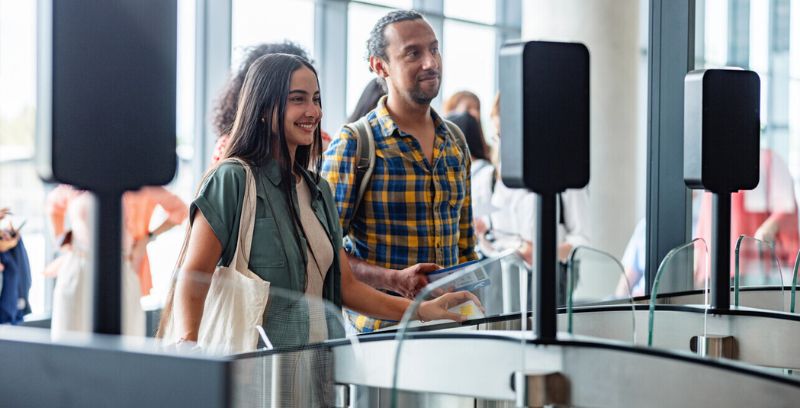
As we support the industry’s recovery, and restore traveler confidence, it is important to think about the role that technology can play. This summer Avinor, the firm operating Norway’s 44 state-owned airports took that to heart when it rolled out anambitious end-to-end touchless travel programto tackle the impact of COVID-19, and help restore traveler confidence ahead of Norway’s summer season. Thanks to new social distancing processes, passengers can check-in for a flight remotely and receive a boarding pass barcode sent to their mobile phone, which also acts as a coupon to print the passenger’s bag tag. Upon arrival at the terminal the passenger presents the barcode to a self-serve kiosk and the passenger’s baggage tag is automatically printed. No touch + less stress = one happy traveler.
What true collaboration looks like
Picture this: when you board a flight, a message is automatically sent to your hotel. The hotel automatically checks you in and a digital room key is dispatched to you. When you arrive, you can skip the hotel front desk and head straight to your room. This type of contactless travel isn’t science fiction:Journerais already working on algorithms that match customers and trip components across different companies, delivering real-time insights with full data security to partners before, during and after a customer’s trip. A number of leading players in the U.S. travel industry are already working with the company.As the urgency of contactless travel and offering a “whole journey” experience has accelerated, travel brands are quickly recognizing the of collaboration to achieve frictionless travel.
AI still has more tricks up its sleeve
There is no doubt that innovation will be a major driver of industry recovery. When it comes to AI, there are endless discoveries to be made at all stages of the traveler journey.At the shopping stage for example, we tested machine learning in flight search and saw an increase in bookings thanks to customer choice modelling or real-time personalization. With AI, we can also predict how much travelers could be open to new destinations that we could recommend based on past bookings and searches. AI powered analytics can also have a huge impact on helping airlines to minimize disruptions: unplanned maintenance accounts for30 percent of total delay time in airports, costing airlines millions in revenue. AI can also help any digital organization to manage their operation and IT costs, for instance, by optimizing existing solutions to reduce their CPU footprint. That’s just the tip of the iceberg. Amadeus is always looking for new ways to innovate. Withopen access to our AI based APIs, anyone with a curious mind can help pave the future for growth in travel.
Travel Tech: Building a strong foundation for growth
Adapting with agility
In an unpredictable year like 2020, there’s only one way to work: lean and agile. At Amadeus, our model is the industry standard Scaled, Agile Framework for Enterprises (SAFe) - this workflow means we’re able to change scopes, priorities, and accelerating or decelerating development and delivery of solutions that address our customers’ needs. One of our airline customers, for example, has been using this less busy period to implement a departure control system cutover in a few weeks instead of the three months originally planned. Additionally, we are working with carriers on a case-by-case basis to apply government-mandated safety measures quickly, such as aircraft physical distancing configurations.
TheAmadeus Airline Platform’sopen development environment enables us to create solutions to problems that didn’t even exist at the beginning of the year, and our teams are working from home, making these accomplishments even more impressive.
Keeping a steady ship
Early on we saw the need to have a clear and specificbusiness continuity plan, which was defined in accordance with the ISO standard 22301 for this sort of event. All critical processes are identified, and the associated manpower, hardware, software, and physical resources secured well ahead of time. We also have a plan to ensure an organized and safe reentry of our engineers to the workplace and are ready to revert to remote working, if the situation requires. In the face of such disruption, our teams have been working around the clock to support our customers in re-accommodating travelers, all the while maintaining a stable system and ensuring service continuity.
Helping airlines and travel agents with extended PNRs
This year since the COVID-19 outbreak began, Amadeus had to process 17 times more flight changes and cancellations than average. We went from 150,000 to 2.5 million transactions a day. This peak in activity created a particularly stressful moment for our airline and travel seller customers which have had to handle a flurry of travel re-bookings and refunds. To help them, Amadeus extended the validity of PNRs impacted by COVID-19 from four days up to one year after the original travel date. This allowed them more breathing room to better manage cash flows while meeting their traveler’s demands for re-accommodations.
Key Takeaway: wisdom from above
“We are passionately researching and developing the next generation of technology that will power the recovery of the travel industry. As the saying goes: Qui n’avance pas, recule or ‘Those who don’t move forward, recede.’ Amadeus’ Engineering teams are not only moving forward, we are also pushing the very boundaries of what’s possible with technology, and I am confident that our customers will see the benefits of this as we all adapt to this new world.” - Christophe Bousquet, Chief Technology Officer, Amadeus
To keep up to date with our latest news and hear from our team and guests, sign up to Amadeus Insightshere. This video gives a flavor of what you can find:
TO TOP