-
Solutions
-
Airlines
-
Airports
-
Border Authorities
-
Corporate Travel & Expense
-
Integrations
-
Travel Sellers
-
-
Payments & e-invoicing
-
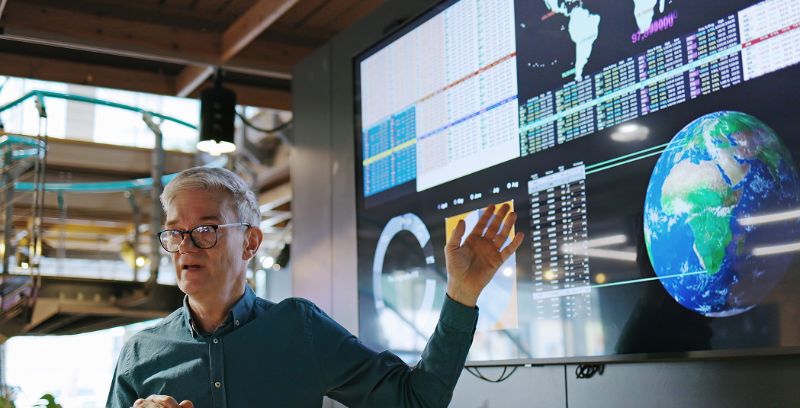 AI at Amadeus
Driving integration, scalability, trust and integrity across the travel industry.
Learn more -

-
-
Support & Training
-
 Already a customer?
Log into My Amadeus Services for product news, learning materials, and customer support.
Login
-
-
-
 Transforming travel with AI
Our partnership with Microsoft accelerates our Cloud journey and unlocks new, AI‑powered innovations that strengthen and elevate the travel industry.
Learn more -
 Landmark partnership between Amadeus and Google Cloud
Learn how this collaboration strengthens Amadeus' multi-cloud approach and AI innovation to improve efficiency, reliability and growth in travel.
Learn more
-
-
-
Trending Topics
-
 Six travel trends that will redefine how we travel in 2026 and beyond
Amadeus, in collaboration with Globetrender, unveils the tech, policy and innovation coming to transform the face of travel.
Discover now -
 Airlines in the agentic age: use cases and ideas for getting started with AI
Built on airline input, with Microsoft support, exploring real AI use cases.
Access whitepaper
-
-
Company
-
About Amadeus
-
Careers
-
Innovation
-
Sustainability
Learn how we’re working to make travel a force for good.
-
 Amadeus Global Report
Gain insights into Amadeus' 2025 business, financial performance, and sustainability.
Read the report -
-
-

Ada Lovelace is considered the first computer programmer. Working nearly 200 years ago, she was the first to realize machines could complete sequences of mathematical operations.
Ada Lovelace is considered the first computer programmer.
Working nearly 200 years ago, she was the first to realize machines could complete sequences of mathematical operations. One example – how to calculateBernoulli numbers – is today regarded by historians as the first computer program.
In honor of her pioneering work, each year we celebrateAda Lovelace Day, an event to raise the profile of women in science, technology, engineering and math (STEM) by encouraging people around the world to talk about the women whose work they admire.It is a day that helps us learn about the achievements of women in STEM fields, inspiring others and creating new role models for young and old alike.
10 years in tech
This year I would like to offer insight into my own work as a Product Definition Analyst here at Amadeus, while looking at how our organization is contributing to growing the role of women in technology.
At Amadeus, our people are at the heart of everything we do. Wherever they are in the world, our technology experts are curious about the future. We have a truly diverse global workforce, made up of 150 nationalities, offering incredible insights and knowledge.
My own work is focused on the rail industry, where I am responsible for understanding the requirements we receive from clients via product owners. I perform thorough gap analyses, reverting to clients if any changes are needed.
Through my work, we are able to create detailed specifications for internal stakeholders and user guides for external stakeholders, while I also support quality assurance and development teams with any functional queries.
I have over a decade of experience in the field, with expertise in various roles, including SQL developer, quality analyst, business analyst and scrum master.
With the advantage of working as a business analyst, a developer and a quality analyst – known in the industry as a ‘Three Amigos’ role – I can easily share the technical or business information needed within the relevant teams.
Inspiration and support
Female colleagues, here at Amadeus, but also in my previous roles with Tata Consultancy Services (TCS) and Sapiens, have provided a real boost to my career. I am fortunate to have met fantastic women who really helped me shape my future.
When I joined as a fresher in TCS, my onsite manager Swetha was such an inspiration. She stood by me and guided me while I was learning new things. She supported me, giving me the confidence to accept new roles within my career. Another previous manager, Alamelu at Amadeus, also opened the door of innovation and Intellectual property for me.
However, my biggest inspiration is my mom. She always dreamed big for me, telling me to stand independently and to try to make a difference.
When I was growing up, whenever my class teacher asked me what I wanted to be I would say ‘software engineer,’ even from a very young age. As I have grown, my dream became a reality and I got a degree in software engineering, and this is down to the support I have received from my mother and other women along the way.
Making a difference
Amadeus is working to develop more journeys like mine.
In Bangalore, we ran a pilot Returnship program to bring women back to the tech workforce after long absences from the office. Primarily aimed at mothers who had left the workforce, the 6-month program included a boot camp to re-skill and upskill the women. At the end of the program, 20 women were hired – and the project will be repeated again this year.
There is also the global Amadeus Women’s Network (AWN). This is a global initiative to create a positive influence that motivates, inspires and enables women to develop both professionally and personally with the support of other women and men.
Its members aim to offer educational and networking opportunities through meetings, events, workshops and conferences both internally and externally. Many sites at Amadeus also have local chapters of AWN.
I believe that women bring a diversity of perspective to the table. With technology being part of our daily life, having a diverse workforce ensures that products and services are designed with a broader range of users in mind, making them more inclusive.
In the past, women tended not to ask questions or give their opinion unless asked, but that is changing. Breaking this stereotype will help us take the next step to explore and experiment without the fear of judgement. At the same time, we must work to create an ecosystem and learning environment that is not biased with stereotypes, encouraging women to take the step into STEM fields. By sharing my story, I hope others will be inspired to follow Ada Lovelace and many other women, such as myself, to build their own careers in STEM.
TO TOP