-
Solutions
-
Airlines
-
Airports
-
Border Authorities
-
Corporate Travel & Expense
-
Integrations
-
Travel Sellers
-
-
Payments & e-invoicing
-
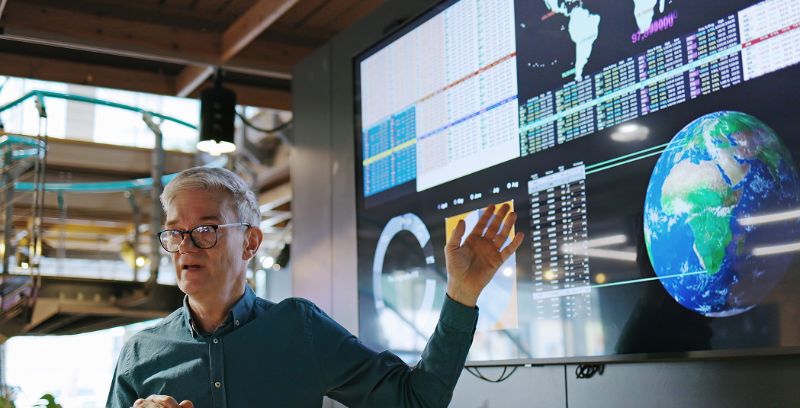 AI at Amadeus
Driving integration, scalability, trust and integrity across the travel industry.
Learn more -

-
-
Support & Training
-
 Already a customer?
Log into My Amadeus Services for product news, learning materials, and customer support.
Login
-
-
-
 Transforming travel with AI
Our partnership with Microsoft accelerates our Cloud journey and unlocks new, AI‑powered innovations that strengthen and elevate the travel industry.
Learn more -
 Landmark partnership between Amadeus and Google Cloud
Learn how this collaboration strengthens Amadeus' multi-cloud approach and AI innovation to improve efficiency, reliability and growth in travel.
Learn more
-
-
-
Trending Topics
-
 Six travel trends that will redefine how we travel in 2026 and beyond
Amadeus, in collaboration with Globetrender, unveils the tech, policy and innovation coming to transform the face of travel.
Discover now -
 Airlines in the agentic age: use cases and ideas for getting started with AI
Built on airline input, with Microsoft support, exploring real AI use cases.
Access whitepaper
-
-
Company
-
About Amadeus
-
Careers
-
Innovation
-
Sustainability
Learn how we’re working to make travel a force for good.
-
 Amadeus Global Report
Gain insights into Amadeus' 2025 business, financial performance, and sustainability.
Read the report -
-
-

Did you know that Ada Lovelace is considered to be the first computer programer? As we celebrate her day, highlighting the achievements of women in STEM subjects, we have a chance to explore the tools that we can use to build a more inclusive workplace.
As far back as I can remember, I wanted to work in a STEM (science, technology, engineering and math) field. When I was a child, I wanted to become a vet, but a mild fear of dogs (and cats) put me off when I was in my teenage years. It has improved with time, but I still don’t have a pet! Nonetheless, this revelation sent me off in a different direction – and I haven’t looked back.
After high school, I was accepted at Polytech Nice, an engineering college in my native France, working on a two-year preparatory degree. This gave me time to decide where I wanted to focus my energies, while exploring a number of diverse topics, including electrical engineering, electromagnetism engineering, hydraulics and computer science. With this experience, I selected the applied mathematics specialty, a half-math and half-computer-science major.
After graduation, I started working for Amadeus in London as a C++ and Java developer, moving to an engineering manager role after two years, before returning to Nice to take up my current position, just six years after graduating. I now head a team of 15 developers, business analysts and quality analyst engineers. As we will see, this early focus on STEM subjects was vital for my career – and something that should be encouraged among young women as we seek to build more inclusive workplaces. My education gave me the tools needed to overcome the challenges presented in a field dominated by men.
Today, I would like to explore two paths to a more inclusive future – one where we can honor Ada Lovelace and build opportunities for women in STEM fields.
Unconscious bias
Firstly, to boost inclusion, men and women must support each other in the workplace and working on our unconscious biases is key. We all have them – which is not the problem. Acknowledging them and reacting accordingly when we make decisions, especially when the outcomes impact a minority, is fundamental to moving forward. To start, I suggest exploring the tests offered byProject Implicit from Harvard. The results can often be surprising. I consider myself a strong feminist and an inclusive person, but my results were not what I expected. Nobody is immune to unconscious bias - and realizing this is the first step toward improving diversity.
With this in mind, it is possible to identify situations in the workplace where unconscious bias might get in the way. As a manager evaluating your colleagues, do you first praise a male developer for his strong Java skills, while then praising his colleague, a female developer with similar skills, for her good communication and cheery manner? That is an instance of unconscious bias – and one that must be tackled.
Career ladder
Let’s move on to the second idea I wish to explore – the critical role companies play in encouraging young women to take up STEM subjects. This can be done in a number of ways, for example, through outreach, mentoring and apprenticeships for young girls.
While I was in London, I really enjoyed giving talks to young women on software development and what my role at a tech company is like. In France, Amadeus helps promote professional development for girls and young women by visiting schools and providing volunteer mentors for girls through programs like Capital Filles.
When we hear there are not enough female employees at the highest technical levels of an organization, a common refrain is that there are not enough women applying for entry-level positions - those who could be future leaders of the company and role models for the next generation of women in STEM fields.
As was my own case, early contact for girls with STEM fields and women role models is key to building a future Ada Lovelace would be proud of.
TO TOP