-
Solutions
-
Airlines
-
Airports
-
Border Authorities
-
Corporate Travel & Expense
-
Integrations
-
Travel Sellers
-
-
Payments & e-invoicing
-
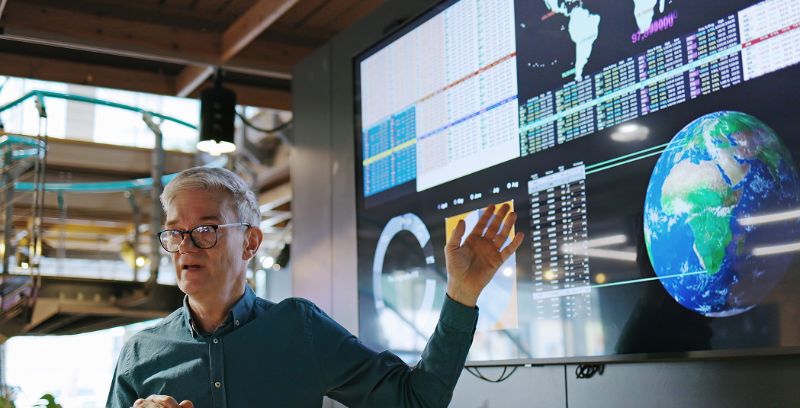 AI at Amadeus
Driving integration, scalability, trust and integrity across the travel industry.
Learn more -

-
-
Support & Training
-
 Already a customer?
Log into My Amadeus Services for product news, learning materials, and customer support.
Login
-
-
-
 Transforming travel with AI
Our partnership with Microsoft accelerates our Cloud journey and unlocks new, AI‑powered innovations that strengthen and elevate the travel industry.
Learn more -
 Landmark partnership between Amadeus and Google Cloud
Learn how this collaboration strengthens Amadeus' multi-cloud approach and AI innovation to improve efficiency, reliability and growth in travel.
Learn more
-
-
-
Trending Topics
-
 Six travel trends that will redefine how we travel in 2026 and beyond
Amadeus, in collaboration with Globetrender, unveils the tech, policy and innovation coming to transform the face of travel.
Discover now -
 Airlines in the agentic age: use cases and ideas for getting started with AI
Built on airline input, with Microsoft support, exploring real AI use cases.
Access whitepaper
-
-
Company
-
About Amadeus
-
Careers
-
Innovation
-
Sustainability
Learn how we’re working to make travel a force for good.
-
 Amadeus Global Report
Gain insights into Amadeus' 2025 business, financial performance, and sustainability.
Read the report -
-
-
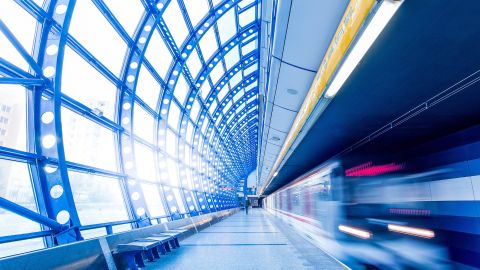

The European railway market opened up to competition back in 2010, allowing railways to compete on international routes. In this blog post, we look at Britain and Sweden's examples to anticipate what the European Railway deregulation could look like.
UK rail privatization
The UK is the most mature privatized market, but also the most criticized. In 1994, the British Government auctioned Britain’s rail service. As a result, a new franchise model was born: contracting companies to run rail services. British Rail, together with 28 private companies, took control of the passenger lines, paying for infrastructure and stations usage. However,the results have not been positive so far:
- Privatization has doubled public spending on railroad subsidies
- There is no innovation, neither infrastructure modernization
- There have been many security issues, due to the track deterioration
- Ticket prices keep on rising , being the most expensive in Europe
- Rail passengers fell last year to 1.7bn , the biggest passenger decrease since privatization
- Many of the franchises hit financial trouble,according to the Financial Times ; the slim margins do not attract bidders to take over franchise contracts.
Theconcession system in the United Kingdom is a complex one and involves too many actors.We believe it needs greater collaboration between all operators and authorities, before awarding any new franchise.
Sweden’s approach to privatization
In 2010, the Swedish market was 100% open to competition, with theaim to increase lines, frequencies and passenger ridership.Rail liberalization divided Sweden’s state railway into two different companies: one responsible for the infrastructure, Banverket (BV) and, one responsible for operating the trains,Swedish Rail (SJ) . This division led to a conflict of interests, as both companies did not share the same priorities. Since then, the rail sector experienced a dramatic job decrease and had an impact on working conditions.
However, despite all the challenges,the overall result of the rail liberalization in Sweden is positive.Rail passengers have increased(from 10,828 in 2010 to 12,373 in 2016). Moreover, the average ticket price has gradually reduced, following the entrance of Sweden’s new rail entrant,MTR Express , back in 2015.
Technology: the enabler to rail liberalization
Objectives for the liberalization of the rail market are to:
- simplify rail travel
- stimulate competition
- bring down fares
and we are glad to see already some of those positive effects.
Yet, this is a complex exerciseand the UK is the perfect example of the challenges for the rail industry:infrastructure (the tracks) and train operations (transport services)split and afurther split of functions (sales, cleaning, maintenance, train driving, and controls) to create competition.
TO TOP