







Forget about Minority Report and its sexy gesture interface - predicting the future is very different from what you see in the movies .In reality, it’s all about finding patterns in a vast amount of data. Applying the right statistical models allows you to gain insights from the information at your disposal. The hidden patterns unveiled by the process makes it possible to make predictions. This is what we call predictive analytics. This is how the retail industry is able to predict what customers buy according to the time of the month or other items they have just purchased.

In the travel industry, predictive analytics has many uses. The incredibly large amount of data, combined with predictive modelling, unlocks a realm of possibilities for airlines, airports,travel agencies... and of course the travellers.
Here are a few examples using predictive analytics components:
Recommender systems for travel products (e.g., hotels, flights, ancillary services)
There are thousands of possible combinations of flights connecting Los Angeles and New York for example, and this figure breaks the roof when combining possible services. But which travel solutions and services are relevant for a given passenger? Which hotel is the most pertinent for a young couple who just booked their flights for next summer holidays? Recommender systems provide win-win value for both users and travel providers by proposing the most valuable and relevant options to users while maximizing revenues of travel providers. Predictive analytics help to better understand user needs and match this knowledge to possible products and services.
Video, image, and voice recognition systems for travel purposes
Our human brains respond to stimulus coming from different senses. They are better adapted to understand natural forms of communication like images of sounds rather than textual written information. With the development of Deep Learning and other AI algorithms, the processing of this unstructured data is notSci-Fianymore. Machines are now able to understand images and sounds, and in some cases, even better than the human brains. This brings new opportunities for applications in the travel industry: from inspiration (where to go?) to automation of reservations.
Click and conversion optimisation for travel products and online-advertising campaigns
Online marketing is all about conversion; that is, the ability to sell products or services with minimum exposure. Attracting users to an ad is not enough if customers are not buying. New predictive algorithms could estimate conversion and help better define travel products, better place the ads and finally optimize advertising campaigns. These advanced algorithms, fed with enriched travel data, become more and more able to understand passenger needs, notably based on a combination of hundreds of specific factors that have been found to be relevant for travellers. This opens new areas and unlocks huge opportunities for online advertising.
Social media analysis (e.g., sentiment analysis and profiling)
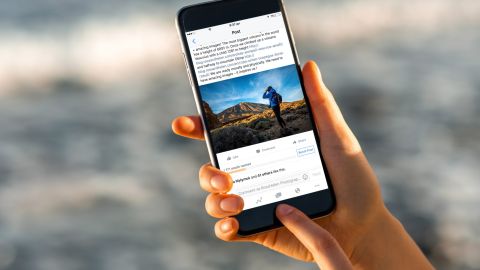
Monitoring social networks is a strategic task and it is not possible to do it manually anymore. For example, it has been estimated that 90% of American travellers (who have a smartphones) share photos and experiences about their travels on social networks. Similarly, millions of travel-related reviews are shared on the internet every day. Sentiment Analysis permits the estimation of the polarity of these posts (e.g., reviews, tweets) in milliseconds. That means knowing if they are positive, negative, and so forth. Predictive analytics have been also been used on social networks to better known users, their interest and needs. Just tell me who your friends are and how you write and the algorithms will tell you who you are (or what you look like).
Alerting and monitoring
The travel industry generates huge volume of data. For example Amadeus process more than 1 billion transactions per day in one its data centres. New aircraft have close to 6,000 sensors generating more than 2 Tb per day. Obviously this data cannot be analysed by human beings. Using supervised machine learning algorithms, known defects can be anticipated when a combination of factors are observed much like how a set of symptoms helps doctors diagnose a particular disease (with some probability). On the other hand, unsupervised learning algorithms have helped detect anomalies to generate alerts when some data observation become suspiciously rare.
Have a look at 5 more examples of predictive analytics in travel industry and let us know what you think by leaving a comment below or sending a Tweet .





TO TOP