





How contextualized airline retailing is powered by modern delivery management systems


Airline retailing is no longer confined to just ticket sales; it’s a dynamic opportunity to personalize every step of the traveler’s journey. With new delivery management systems, airlines will be able to drive additional revenue by making personalized and contextualized offers to travelers at physical or digital touchpoints at the airport. Here’s how it works.
What is an airline delivery management system?
We often talk about an ongoing transition to airline retailing. What do we mean by this? At its most basic, it means replacing today’s Passenger Service System (PSS) approach which tends to be designed around legacy industry processes, with a new, far more traveler-centric, digital and data-driven system to manage airline sales and passenger servicing.
This approach relies on three interconnected pillars. The first is Offer, which is a personalized, clearly defined product bundle. For example, this could include a flight, baggage allowance, seat selection and meal options - assembled and priced based on the needs of the traveler and market conditions. The second pillar is Order, which provides a single, unified record of everything the traveler has purchased. The final pillar and the focus of this blog is Delivery.
Delivery management functions as the operational core that ensures the execution of personalized service entitlements across the journey, be it a seat upgrade, a meal, or lounge access. Sitting between retailing and airport service points, it ensures that:
a) What the passenger has purchased is delivered correctly and smoothly
b) The passenger's context and entitlements are known at every touchpoint
and
c) Airlines can operate more efficiently and adapt in real time.
What does this mean for personalized airline retailing?
Removing legacy constraints
When it comes to airline retailing, current Departure Control Systems (DCS) have a major limitation, but switching to modern delivery systems removes it. Today, 24–48 hours before departure, control of the passenger record shifts from the airline’s commercial system (which handles shopping, booking and selling) to the DCS (which handles processes such as check-in and boarding). With that shift, retailing capabilities are limited, meaning that airlines cannot easily sell or personalize new offers. Yet this time window, which includes time spent at the airport, is one of the most significant opportunities to offer additional services to passengers.
With modern delivery management systems for airlines, this hard hand-off disappears. Airlines can now maintain commercial engagement with travelers throughout their entire trip, from booking to being at the airport and even during their onward journey.
This is important because it means that airlines can continue to offer personalized services and retail options at every stage. It also enables them to provide offers at better times and with greater contextual awareness, such as lounge access and seat upgrades at check-in.
Connecting data and delivery
Instead of its own retail tools, the airline delivery management system draws on commercial logic from the airline’s offer system, thereby reducing duplication and costs. In short, airlines benefit from a continuous, data-driven relationship with travelers, with no cut-off in the final days and hours before the flight. This 24-hour period is crucial for last-minute upgrades, lounge access, additional baggage requirements, and personalized boarding or seating assistance.
Access to real-time, actionable data enables airlines to unlock high-margin revenue opportunities while delivering elevated, tailored experiences that drive loyalty.
Real-time airline retailing
Here's an example of how real-time data and connected systems can transform the passenger experience and generate new revenue.
Suppose a passenger arrives at the airport four hours before their flight. The airline Delivery Management System detects their early arrival, and this information is then passed to the Offer System, which generates customized and contextual retail offers based on their passenger profile.
The traveler profile system, with the required passenger consent, identifies this passenger as a business traveler based on past trips and behaviors, even though they’re flying economy. The system then checks real-time seat availability and finds that there are open business class seats on an earlier flight. Based on this information, the system sends a personalized upgrade offer to the passenger’s app: 'Would you like to fly earlier in business class for $200?'
This is an instance of event-driven, real-time airline retailing. Rather than selling based on a booking made days or weeks ago, the airline now reacts to the passenger's current situation, combining real-time context, such as location and timing, with any passenger profile data which passenger consents to share, and current inventory and pricing information.
This smart, seamless approach turns every moment, even at the airport, into an opportunity to add value for passengers and increase revenue for airlines.
In the example above, the offer is contextualized and customized to a business traveler’s likely preferences. It's real-time and based on an up-to-date understanding of the passenger’s general context. Thanks to the airline delivery management system, purchases are instant and orders are updated automatically, so there is no need to go to a counter. Further examples of delivery management for airlines in action are provided in our recent whitepaper.
The benefits for the passenger are clear: a smoother journey and better service (an earlier, upgraded flight, less waiting time). For the airline, there is increased revenue from upgrades that would otherwise have remained unsold. With the required consent, the passenger’s contextual information can also be shared with partners - for example, if a flight is delayed the passenger’s hotel could be notified and offer a late check-out, creating further monetization or loyalty opportunities across the entire journey.
Transforming terminals into high-value retail hubs
The shift to modern delivery management systems for airlines represents a structural evolution in airline operations, from manual, reactive processes to scalable, real-time service orchestration, with the traveler at the core, aligned with strategic commercial goals.
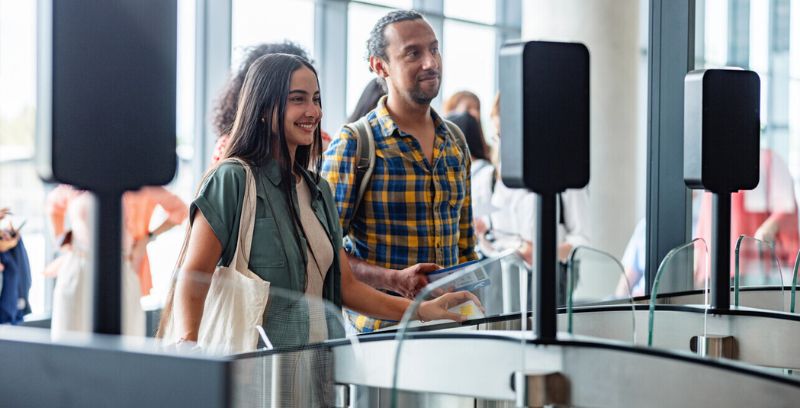
Overall, it means there is less friction at the airport. Outdated processes such as check-in and manual document checks can be automated or eliminated entirely. When traveler identity, preferences and entitlements are known across systems, every terminal touchpoint becomes a commercial and experiential opportunity. As a result, the airport terminal will no longer just be a processing zone; it will become a high-value retail environment.
This shift also creates new non-aeronautical revenue streams for airports that can provide their services (parking, fast track security, food & beverage etc.) to be included as part of an airline’s personalized offers. Amadeus expects enhanced collaboration between airports and airlines to provide passengers with a more joined-up and relevant experience.
Personalized airline retailing is not an aspiration for the future; it is already being deployed by major airlines. Modern delivery management systems for airlines enables personalization in both digital and physical environments. For airlines, this represents a significant strategic opportunity to increase revenue, improve operational agility, and boost customer loyalty. Those that adopt modern delivery systems will differentiate themselves from competitors and optimize the entire travel experience.
This is part two in our blog series on airline retailing and airline delivery management systems. Read part one here.
TO TOP