-
Solutions
-
Airlines
-
Airports
-
Border Authorities
-
Corporate Travel & Expense
-
Integrations
-
Travel Sellers
-
-
Payments & e-invoicing
-
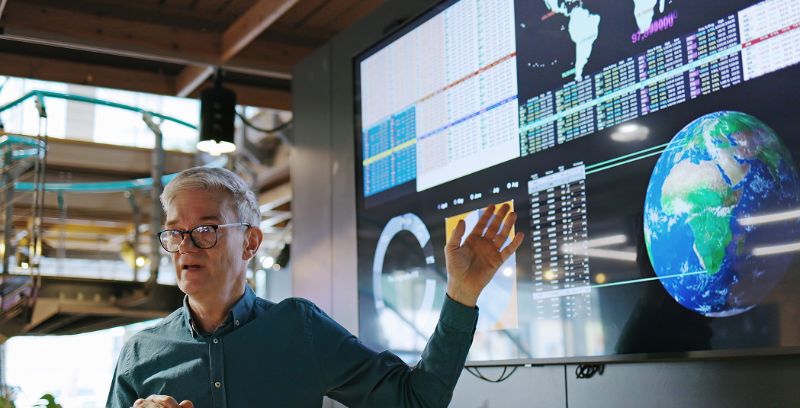 AI at Amadeus
Driving integration, scalability, trust and integrity across the travel industry.
Learn more -

-
-
Support & Training
-
 Already a customer?
Log into My Amadeus Services for product news, learning materials, and customer support.
Login
-
-
-
 Transforming travel with AI
Our partnership with Microsoft accelerates our Cloud journey and unlocks new, AI‑powered innovations that strengthen and elevate the travel industry.
Learn more -
 Landmark partnership between Amadeus and Google Cloud
Learn how this collaboration strengthens Amadeus' multi-cloud approach and AI innovation to improve efficiency, reliability and growth in travel.
Learn more
-
-
-
Trending Topics
-
 Six travel trends that will redefine how we travel in 2026 and beyond
Amadeus, in collaboration with Globetrender, unveils the tech, policy and innovation coming to transform the face of travel.
Discover now -
 Airlines in the agentic age: use cases and ideas for getting started with AI
Built on airline input, with Microsoft support, exploring real AI use cases.
Access whitepaper
-
-
Company
-
About Amadeus
-
Careers
-
Innovation
-
Sustainability
Learn how we’re working to make travel a force for good.
-
 Amadeus Global Report
Gain insights into Amadeus' 2025 business, financial performance, and sustainability.
Read the report -
-
-
- Home
- News
- Press releases
- New Amadeus study: Majority of aviation leaders expect flight disruption to remain elevated
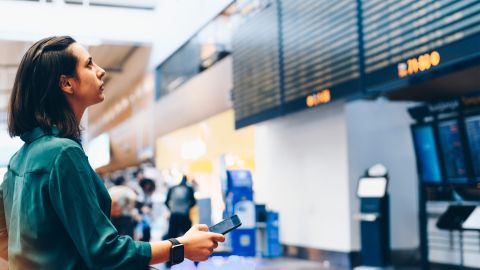

- Airlines and airports cite ‘brand damage’ ahead of ‘increased costs’ as top impact from persistent levels of disruption*
- Industry leaders call for better integrated systems and collaborative platform technology to aide response
Flight disruption remains above historical norms as the aviation industry continues to grapple with a skills shortage and the rapid return of demand for air travel across every region of the world.
It’s against this backdrop that travel technology company Amadeus has commissioned a major new study ‘Better together: Rethinking how to manage disruption in aviation’ with senior airline and airport executives to understand the scale of the challenge and how they plan to reduce the impact of disruption for passengers.
The majority of airline and airport executives surveyed (52%) said their organizations are currently experiencing more disruption than in 2019, compared to a third reporting less. With more industry leaders expecting disruption to remain elevated, taking action to mitigate the impact has become a top priority.
“In 2022 airlines struggled with supply and staffing issues, but during 2023, airlines and their partners are simply facing an unprecedented return of demand. Of course, that’s very welcome, but it brings its own operational challenges,” said Harry Grewal, Director of Infrastructure and Customer Experience, IATA
Key insights from the study include:
- 64% of airlines are investing in new technology to improve their response to disruption
- The top reason for airline investment was to ‘improve our public image’ at 70%, well ahead of ‘to reduce costs’ at 34%
- Airlines point to the need for ‘closer integration of our own operational systems to gain a holistic view disruption’ as the top capability to improve their response
- Airport leaders reported a ‘lack of common technology that brings stakeholders together’ as their top challenge when responding to disruption (50%)
- A third of airport leaders pointed to ‘last minute provision of information from airlines’ as a persistent challenge.
- All airports surveyed confirmed they are planning to invest in technology at their Operational Control Centers to better manage disruption. A quarter plan to do so in the next 12 months.
Holger Mattig, SVP Product Management, Amadeus Airport & Airline Operations, said: “Disruption is a hugely complex problem that requires airlines, airports, ground handlers and others to work collaboratively. Unfortunately, we still have too many information silos in aviation, which impacts the overall response and ultimately passengers. However, I do sense a real determination across the industry to put historic commercial tensions to one side and deliver a better, more joined-up and traveler-centric approach to disruption that’s empowered by shared technology.At Amadeus, we are happy to contribute to this stronger ecosystem collaboration across people and technology, allowing for more efficient airport operations and a smoother end-to-end passenger experience”.
The topical study investigates the technical, organizational and commercial barriers to better disruption management whilst identifying the passenger experience, cost reduction and reputational risk as catalysts for change. Drawing on in-depth interviews with leaders from organizations including Air France, SAS, Western Sydney International Airport and Queen Alia International Airport, the report spotlights several major new initiatives. Aviation executives outline projects to improve how passengers are re-accommodated, how to better re-plan non-air aspects of the trip and how to deliver a more joined-up operational response between airlines, airports, and ground handlers.
* “Flight disruption” is defined as “situations where a scheduled flight is cancelled, or delayed for two hours or more, within 48 hours of the original scheduled departure time”. Source: ICAO (International Civil Aviation Authority)
TO TOP